Continuous Glucose Monitoring (CGM): What Is It and Who Is It For?
A complete guide to continuous glucose sensor (CGM) technology, real-time metabolic tracking, personalized nutrition, and healthspan optimization.
Book ConsultationQuick Summary
- Continuous Glucose Monitoring (CGM) is a wearable technology that tracks glucose levels 24/7 in real time via interstitial fluid.
- Traditional Fasting Blood Sugar and HbA1c give static snapshot averages, whereas CGM reveals glucose spikes and glycemic variability.
- Who It Benefits: People with Type 1 & Type 2 diabetes, prediabetes, metabolic syndrome, as well as non-diabetic adults seeking weight management, athletic performance, or longevity.
- Minimizing hidden post-meal glucose spikes lowers systemic inflammation, reduces visceral fat storage, and improves daily mental focus and energy levels.
- CGM forms a core component of Precision Nutrition and preventive health optimization at ASY Clinic.
Table of Contents
1. What Is Continuous Glucose Monitoring (CGM)? 2. How CGM Works: Blood vs. Interstitial Fluid 3. CGM vs. Traditional Fingerstick & HbA1c 4. Who Is CGM Recommended For? 5. The Role of CGM in Precision Longevity & Men's Health 6. The ASY Clinic Glucose Optimization Program 7. Key Takeaways1. What Is Continuous Glucose Monitoring (CGM)?
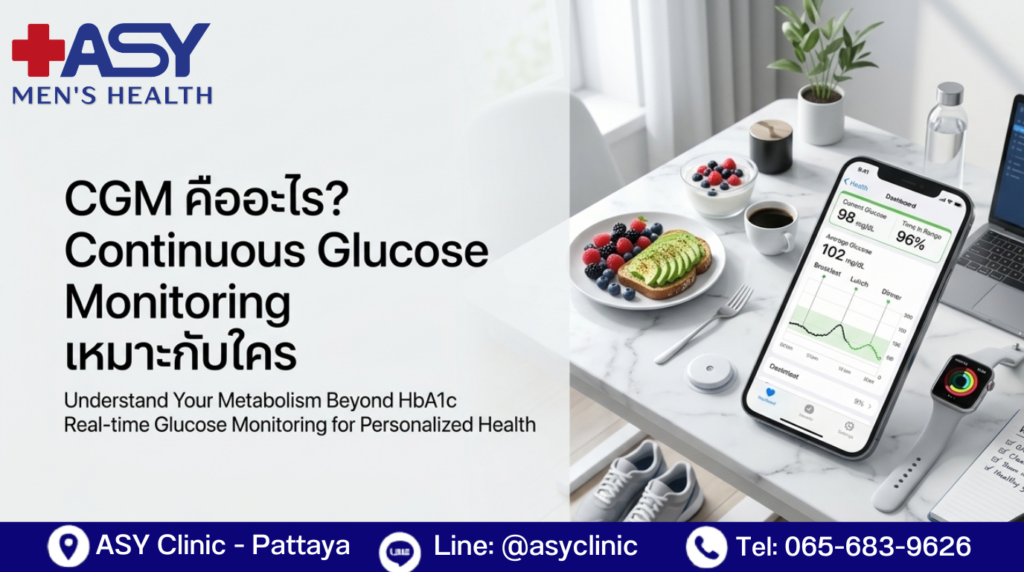
Continuous Glucose Monitoring (CGM) is an advanced medical sensor technology that measures body glucose concentrations continuously throughout the day and night. The small, water-resistant sensor is applied onto the skin (typically the back of the upper arm or abdomen) and worn comfortably for 10 to 14 days.
Unlike conventional lab tests that require fasting blood draws or painful fingersticks, a CGM automatically records glucose readings every few minutes. The data transmits wirelessly to a smartphone application, creating a dynamic visual graph of your real-time metabolic responses.
In modern preventive medicine and Precision Longevity, CGM technology has evolved beyond diabetes management—it is now a powerful tool for personalized nutrition, energy stabilization, and early metabolic risk prevention.
2. How CGM Works: Blood vs. Interstitial Fluid
To understand CGM data accurately, it is important to know where it measures glucose. While fingerstick blood glucose meters test glucose directly in capillary blood, CGM sensors measure glucose in the interstitial fluid (ISF)—the fluid surrounding cellular tissues under your skin.
Glucose moves from blood vessels into interstitial fluid, creating a natural delay known as "lag time" (typically 5 to 10 minutes). During steady conditions (like fasting in the morning), blood and interstitial glucose levels match closely. However, rapidly after meals or intense exercise, the CGM graph reflects these dynamic curve movements with immense precision.
3. CGM vs. Traditional Fingerstick & HbA1c
Relying solely on an annual HbA1c Test or fasting blood glucose can hide important metabolic signals:
| Testing Method | What It Measures | Key Strengths | Major Limitations |
|---|---|---|---|
| Fasting Blood Sugar (FBS) | Single snapshot of glucose after 8–12 hrs fasting. | Simple, low cost, standard initial screening. | Misses post-meal spikes and daytime fluctuations. |
| HbA1c Test | Average blood glucose over the past 2–3 months. | Reliable diagnostic baseline for diabetes risk. | Cannot show high glucose spikes or low drops (swings average out). |
| CGM (Continuous Glucose Monitor) | Real-time 24/7 glucose curves and trends. | Reveals postprandial spikes, night trends, and food-specific responses. | Requires sensor wear; brief physiological lag behind capillary blood. |
💡 Medical Pearl: Glycemic Variability
Two individuals can have the exact same healthy HbA1c of 5.2%. However, Person A may maintain stable, flat glucose levels, while Person B experiences sharp daily glucose spikes up to 180 mg/dL after meals. High glycemic variability (swings) accelerates cellular oxidative stress and blood vessel damage, even when overall HbA1c appears normal.
4. Who Is CGM Recommended For?
CGM technology provides valuable clinical and behavioral benefits across diverse health goals:
1. Individuals with Type 1 or Type 2 Diabetes
CGM offers life-changing insights for diabetic management. It provides low-glucose (hypoglycemia) alerts, tracks Time in Range (TIR), and optimizes medication or insulin dosing without constant fingerstick pricks.
2. Adults with Prediabetes or Insulin Resistance
For men and women with prediabetes or family history of metabolic syndrome, CGM acts as an interactive biofeedback mirror. Seeing immediate glucose spikes after specific meals empowers individuals to modify carbohydrate intake, food order, and physical activity long before clinical diabetes takes root.
3. Executives & Busy Professionals Facing Brain Fog or Afternoon Fatigue
Sharp post-meal glucose spikes are frequently followed by reactive hypoglycemia—leading to midday energy crashes, irritability, and brain fog. CGM identifies which lunches or dietary habits trigger energy slumps, helping restore sustained mental focus.
4. Individuals Focused on Weight Loss & Visceral Fat Reduction
Repeated high glucose spikes stimulate high insulin secretion. Elevated insulin keeps the body in a "fat-storage" state, making visceral abdominal fat difficult to lose. Using CGM to flatten glucose curves helps suppress chronic insulin excess and supports metabolic flexibility.
5. Athletes & Biohackers Optimizing Performance & Longevity
Endurance athletes use CGM to master intra-workout fueling strategies, while health-conscious adults utilize sensor tracking to optimize biological age, reduce systemic inflammation, and protect vascular health.
5. The Role of CGM in Precision Longevity & Men's Health
In men over age 35, metabolic decline and hormonal shifts are closely interconnected. Insulin resistance lowers Free Testosterone levels by increasing visceral fat and aromatase activity. In turn, lower testosterone further impairs muscle glucose uptake, creating a negative feedback loop.
Incorporating a 14-day CGM sensor evaluation into a Men's Health Screening or Health Check-up After 35 provides direct actionable data to optimize insulin sensitivity, support endocrine balance, and extend functional healthspan.
6. The ASY Clinic Glucose Optimization Program
At ASY Clinic, wearing a CGM is part of a complete, medically supervised metabolic consultation:
- Sensor Application & Setup: Quick, painless application of a medical-grade CGM sensor by trained staff.
- 14-Day Lifestyle & Food Logging: Tracking real-world meals, exercise, sleep, and work stress alongside real-time glucose graphs.
- Physician Data Analysis: In-depth review by our specialists analyzing Time in Range (TIR), average glucose, and peak spike triggers.
- Precision Nutrition Plan: Tailored dietary strategies, supplement recommendations, and exercise timing tailored specifically to your unique metabolic responses.
7. Key Takeaways
- 24/7 Metabolic Insight: CGM provides continuous real-time glucose tracking, capturing hidden spikes that standard blood tests miss.
- Actionable Biofeedback: Shows exactly how specific foods, sleep quality, stress levels, and exercise impact your body.
- For Everyone, Not Just Diabetics: A powerful tool for prediabetes prevention, sustainable weight loss, energy optimization, and longevity.
- Protects Healthspan: Keeping post-meal glucose curves smooth lowers systemic inflammation and reduces long-term metabolic risk.
Frequently Asked Questions
Does applying a CGM sensor hurt?
No. Application is virtually painless. The sensor uses an automatic applicator with a tiny, flexible filament (not a needle) that rests just under the skin in the interstitial fluid. Most patients do not feel it after application.
Can I shower, swim, or exercise while wearing a CGM?
Yes. CGM sensors are water-resistant and designed for daily active living. You can shower, exercise, and sweat normally. Additional protective adhesive patches are available for intense swimming or high-impact training.
How long does one CGM sensor last?
Most commercial continuous glucose monitoring sensors (such as FreeStyle Libre or Dexcom) are designed to be worn continuously for 10 to 14 days before needing replacement.
Do I need to fast before getting a CGM applied?
No fasting is required for CGM sensor application. However, if your doctor is combining sensor placement with comprehensive baseline blood work (such as Fasting Insulin, Lipid Profile, or HbA1c), an 8–12 hour fast may be recommended for that specific morning blood draw.
About the Author
Dr. Sirirat Nakdang
นพ. สิริรัฐ นาคแดง
ศัลยแพทย์ทางเดินปัสสาวะและระบบสืบพันธุ์เพศชาย
Urologist & Men's Reproductive Surgeon
Sirirat Nakdang, MD
Urologist & Men's Health Specialist
Thai Medical License No. ว55466
References
- Battelino, T., et al. (2019). Clinical Targets for Continuous Glucose Monitoring Data Interpretation: Recommendations From the International Consensus on Time in Range. Diabetes Care, 42(8), 1593–1603.
- Shah, V. N., et al. (2021). Continuous Glucose Monitoring in Non-Diabetic Populations: Applications for Health, Fitness, and Metabolic Performance. Journal of Diabetes Science and Technology, 15(5), 1125–1135.
- Ceriello, A., & Prattichizzo, F. (2021). Variability of glucose levels: Is it important? Yes, it is. Diabetes Metabolism Research and Reviews, 37(8), e3472.
- American Diabetes Association (ADA). (2024). Standards of Care in Diabetes—2024. Diabetes Care, 47(Suppl. 1), S1–S343.
Precision Glucose & Longevity Program
Gain real-time insights into your metabolism with a 14-day CGM evaluation and expert physician counseling at ASY Clinic.
Book Consultation
Painless hematuria

Peptides and Healthy Aging: Evidence vs Experimental | Peptide Pattaya