Does Vasectomy Change Semen Quality or Ejaculation?
A clinical explanation of male sterilization anatomy, semen volume, ejaculation sensation, hormone health, and post-vasectomy testing.
Book ConsultationQuick Summary
- No Noticeable Change in Volume: Sperm cells account for only 2% to 5% of total ejaculate fluid; total fluid volume remains virtually unchanged after a vasectomy.
- Appearance & Consistency: Color, texture, smell, and orgasm sensation remain identical because seminal vesicles and the prostate continue producing fluid normally.
- Hormones & Testosterone: Vasectomy strictly cuts the vas deferens tubes; it does NOT affect testicular blood flow, testosterone production, or erectile function.
- Immediate Contraception Warning: Vasectomy is NOT immediately effective. Remaining sperm downstream must be cleared through 15–20 ejaculations before clinical verification.
- Semen Analysis Confirmation: A post-vasectomy semen analysis (PVSA) at 8–12 weeks is mandatory to confirm complete azoospermia (zero sperm) before stopping additional birth control.
Table of Contents
1. Common Concerns About Post-Vasectomy Ejaculation 2. What Is Semen Made Of? (Anatomy of Ejaculation) 3. How Vasectomy Alters Semen Content 4. Impact on Testosterone, Libido, and Erectile Function 5. The Post-Vasectomy Clearance Protocol 6. The ASY Clinic Approach to Male Reproductive Health 7. Key Takeaways1. Common Concerns About Post-Vasectomy Ejaculation
For men considering a Vasectomy (Male Sterilization), one of the most frequent and understandable worries involves what happens during sexual climax after the procedure. Questions like "Will I still ejaculate normally?", "Will the volume drop significantly?", or "Will my semen look or feel different?" cause many men to hesitate.
The straightforward medical answer is: No, a vasectomy does not noticeably alter the volume, appearance, texture, or sensation of your ejaculation.
Understanding male reproductive anatomy clarifies why this is the case. A vasectomy is a minor, highly effective surgical procedure that blocks the transportation of microscopic sperm cells while leaving the body's fluid-producing glands completely intact.
2. What Is Semen Made Of? (Anatomy of Ejaculation)
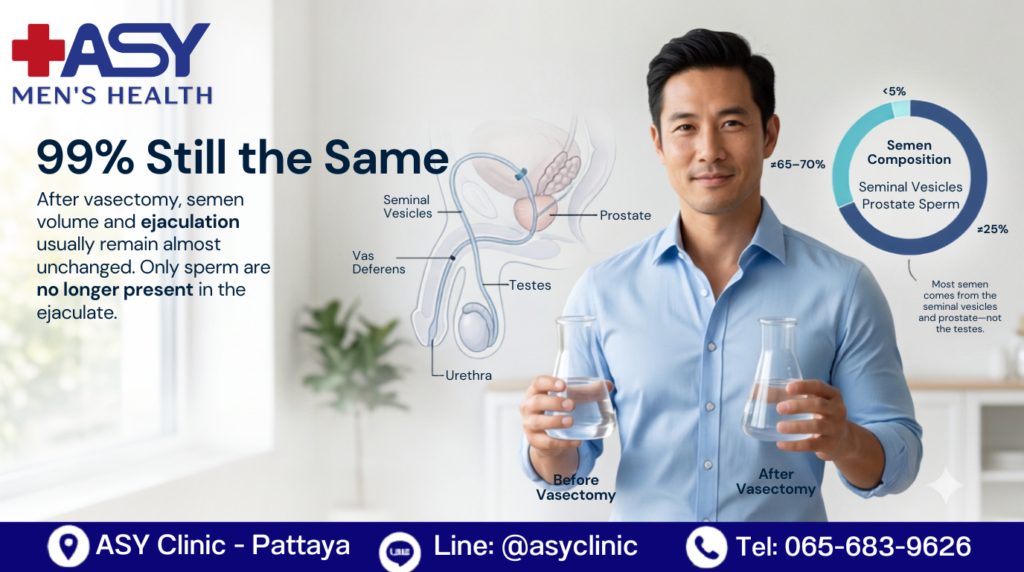
Many people assume that semen is composed mostly of sperm cells. In reality, sperm cells make up only a tiny fraction of the total fluid ejaculated during intercourse:
| Gland / Source | Percentage of Ejaculate Volume | Primary Function |
|---|---|---|
| Seminal Vesicles | 60% – 70% | Produces nutrient-rich fructose fluid to nourish and transport sperm. |
| Prostate Gland | 25% – 30% | Provides alkaline fluid protecting sperm and giving semen its fluid texture. |
| Bulbourethral Glands | 1% – 5% | Produces lubricating pre-ejaculatory fluid. |
| Testes (Sperm Cells) | 2% – 5% | Microscopic reproductive cells produced in the seminiferous tubules. |
Because sperm cells contribute only 2% to 5% of total ejaculate volume, removing them from the fluid results in a volume change that is clinically and visually unnoticeable.
3. How Vasectomy Alters Semen Content
During a vasectomy procedure, the surgeon severs and seals two small muscular tubes called the vas deferens inside the scrotum. These tubes serve a single purpose: transporting mature sperm from the testes toward the ejaculatory ducts.
After a successful vasectomy:
- The prostate and seminal vesicles continue generating fluid exactly as before.
- The brain sends the exact same nerve signals during climax, producing identical muscular contractions and orgasm sensations.
- The testes continue to produce sperm cells, but because the vas deferens path is sealed, the cells are naturally absorbed by the body without causing harm or pressure build-up.
- The only difference is that the ejaculated fluid no longer contains sperm cells—achieving permanent contraception.
💡 Medical Pearl: Post-Vasectomy Semen Analysis (PVSA)
Never assume you are infertile immediately after surgery! Active sperm cells remain stored in the upper vas deferens downstream from the surgical site. You must use alternative contraception until a formal Post-Vasectomy Semen Analysis (PVSA) at 8–12 weeks confirms 100% absence of sperm (Azoospermia).
4. Impact on Testosterone, Libido, and Erectile Function
A widespread medical myth is that vasectomy lowers male hormones or harms sexual performance. Modern reproductive science confirms that vasectomy has zero negative impact on endocrine or erectile health:
- Testosterone Levels: Testicular blood supply and Leydig cells (which produce testosterone) are completely untouched during surgery. Hormone levels remain normal.
- Erectile Function: Nerves and blood vessels responsible for penile erection run along entirely separate anatomical pathways from the vas deferens.
- Sexual Drive (Libido): Libido remains unchanged. In fact, many couples report enhanced sexual satisfaction and intimacy after surgery due to the removal of fear regarding unintended pregnancy.
5. The Post-Vasectomy Clearance Protocol
To ensure absolute peace of mind and medical safety, men undergoing vasectomy must follow a standardized post-operative timeline:
- Initial Recovery (Days 1–7): Rest, light activity, and temporary abstinence from sexual activity or heavy lifting to allow incision healing.
- Clearance Ejaculations (Weeks 2–8): Engaging in 15 to 20 ejaculations (using backup contraception) to flush remaining active sperm out of the downstream reproductive tract.
- Semen Analysis (Week 8–12): Submitting a semen sample to a specialized medical laboratory to verify zero motile sperm cells.
- Official Clinical Clearance: Once the urologist confirms complete azoospermia on laboratory testing, backup birth control can be safely discontinued.
6. The ASY Clinic Approach to Male Reproductive Health
At ASY Clinic, male reproductive procedures and contraceptive counseling are delivered through specialized urological expertise:
- Urologist-Led Care: Consultations, procedures, and follow-up care performed directly by certified urologists and reproductive surgeons.
- No-Scalpel Vasectomy Techniques: Utilizing minimally invasive, advanced surgical methods to minimize tissue trauma, reduce recovery time, and eliminate stitches.
- Laboratory Microscopic Verification: Precise post-operative semen analysis using accredited laboratory standards to ensure 100% contraceptive reliability.
- Integrated Men's Health Assessment: Opportunity to combine post-vasectomy care with baseline Testosterone Testing, Prostate Health Screening, or broad Precision Longevity evaluations.
7. Key Takeaways
- Ejaculation Volume Remains the Same: Sperm cells make up only 2–5% of semen; total fluid volume, color, and texture do not noticeably change.
- Orgasm & Performance Are Untouched: Nerves, blood flow, and muscle contractions during climax operate identically post-surgery.
- Zero Effect on Testosterone: Hormonal production and masculine health are unaffected by cutting the vas deferens.
- Verification Is Essential: Always perform a Post-Vasectomy Semen Analysis (PVSA) at 8–12 weeks to confirm zero sperm before relying on the procedure for birth control.
Frequently Asked Questions
Will my partner be able to tell I had a vasectomy during sex?
No. Semen volume, color, smell, and consistency remain virtually identical after a vasectomy. Neither you nor your partner will notice any difference in fluid characteristics during intimacy.
What happens to the sperm produced after a vasectomy?
After a vasectomy, the testes continue producing sperm as usual. Because the vas deferens is blocked, the unused sperm cells simply break down naturally and are reabsorbed by the body's immune system, just as unused cells are reabsorbed elsewhere in the body.
Can a vasectomy be reversed if I change my mind?
Yes. A procedure called a Vasectomy Reversal (Vasovasostomy) can reconnect the vas deferens tubes under a surgical microscope. However, a vasectomy should always be considered a permanent form of contraception, as reversal success rates decrease over time.
Is a vasectomy immediately effective after surgery?
No. You are not infertile right after surgery. Active sperm remain stored in the upper vas deferens. You must use alternative contraception until a post-vasectomy semen analysis (PVSA) at 8–12 weeks confirms zero sperm.
About the Author
Dr. Sirirat Nakdang
นพ. สิริรัฐ นาคแดง
ศัลยแพทย์ทางเดินปัสสาวะและระบบสืบพันธุ์เพศชาย
Urologist & Men's Reproductive Surgeon
Sirirat Nakdang, MD
Urologist & Men's Health Specialist
Thai Medical License No. ว55466
References
- Sharlip, I. D., et al. (2012). Vasectomy: AUA Guideline. The Journal of Urology, 188(6 Suppl), 2482–2491.
- Jungwirth, A., et al. (2018). European Association of Urology Guidelines on Male Infertility and Sterilization. European Urology, 73(3), 370–378.
- Labrecque, M., et al. (2016). Effectiveness and safety of vasectomy: A systematic review. Contraception, 93(5), 420–428.
- World Health Organization (WHO). (2021). WHO Laboratory Manual for the Examination and Processing of Human Semen (6th ed.). World Health Organization, Geneva.
Consultation & Vasectomy Screening
Discuss permanent contraception options or schedule a post-vasectomy semen analysis with a specialist urologist at ASY Clinic.
Book Consultation
Painless hematuria
Painless blood in urine (Hematuria) may appear only once and disappear, but it should never be ignored. Learn about possible causes—including stones, prostate conditions, kidney disease and urinary tract cancer—and when to see a urologist.

Peptides and Healthy Aging: Evidence vs Experimental | Peptide Pattaya
Peptides are not automatically experimental. Insulin, GLP-1 medicines, teriparatide and many other peptide drugs are established medical therapies. But many peptides promoted for longevity or anti-aging still lack robust human evidence.
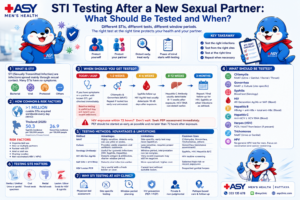
STI Testing After a New Sexual Partner: What to Test & When | Pattaya
STI testing after a new sexual partner is not simply one “full panel” done on one day. Different infections require different samples and have different window periods. Learn what to test, when to test, and when repeat testing may be needed.