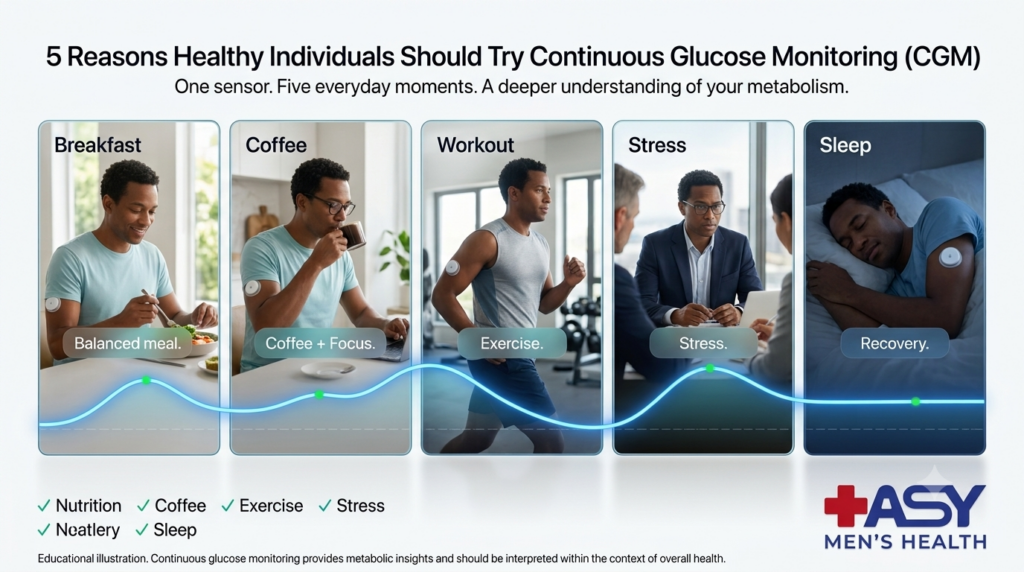
Discover how 24/7 real-time glucose tracking unlocks personalized nutrition, peak energy, metabolic longevity, and optimal biological health.
Book ConsultationQuick Summary
- Beyond Diabetes Management: Continuous Glucose Monitors (CGM) are no longer just for diabetic patients; they have become essential Biohacking and Precision Medicine tools for healthy individuals.
- Uncovering Hidden Metabolic Blindspots: Standard annual blood tests (Fasting Glucose, HbA1c) fail to capture dangerous post-meal glucose spikes or reactive hypoglycemia dips.
- Truly Personalized Nutrition: Identical meals produce radically different glycemic responses in different people based on gut microbiome, muscle mass, and metabolic flexibility.
- Optimizing Sleep & Stress: CGMs clearly map how poor sleep quality, high cortisol levels, and late-night eating impair insulin sensitivity.
- Preventative Longevity: Minimizing glycemic variability slows vascular damage, cellular aging (glycation), and chronic low-grade inflammation.
Table of Contents
The Paradigm Shift in Metabolic Health Reason 1: Discovering Your Unique "Glucose Fingerprint" Reason 2: Eliminating Energy Crashes & Brain Fog Reason 3: Measuring the Impact of Sleep, Stress, and Exercise Reason 4: Detecting Hidden Insulin Resistance Early Reason 5: Promoting Longevity and Anti-Aging (Anti-Glycation) The ASY Clinic Precision Health Protocol Key TakeawaysThe Paradigm Shift in Metabolic Health
For decades, Continuous Glucose Monitoring (CGM) was viewed strictly as a medical intervention for individuals diagnosed with Type 1 or severe Type 2 diabetes. However, modern preventative and longevity medicine has transformed our understanding of metabolic health.
Today, healthy professionals, athletes, and longevity enthusiasts wear CGM sensors not to manage disease, but to optimize biological performance, prevent chronic illness, and personalize daily nutrition.
Even if your annual health checkup reports "normal" Fasting Glucose and HbA1c, your body may still experience significant daily glucose volatility. Here are the 5 science-backed reasons why every healthy individual should try wearing a CGM for 14 days at least once.
Reason 1: Discovering Your Unique "Glucose Fingerprint"
One of the most groundbreaking discoveries in nutritional science (highlighted by Israel's Weizmann Institute Personalized Nutrition Project) is that no two bodies digest carbohydrates identically.
Two individuals with identical body mass index (BMI) can eat the exact same bowl of oatmeal or brown rice:
- Person A: Experiences a smooth, minimal glucose rise of 15 mg/dL.
- Person B: Experiences a massive spike of over 60 mg/dL, followed by an energy crash.
A CGM eliminates nutritional guesswork. Instead of relying on generic diet rules or Glycemic Index (GI) charts, a 14-day CGM wearing period gives you real-time feedback on exactly which foods nourish your body and which trigger metabolic stress.
Reason 3: Eliminating Energy Crashes & Brain Fog
Have you ever experienced severe afternoon sluggishness, difficulty concentrating, or intense sugar cravings shortly after lunch? This phenomenon—commonly known as the "food coma"—is frequently caused by Reactive Hypoglycemia.
When you eat high-glycemic meals, your blood sugar spikes rapidly. In response, your pancreas oversecretes insulin to clear the excess sugar, driving your blood glucose levels down below baseline.
| Metabolic Phase | Glucose Movement | Physical Sensation & Biological Symptoms |
|---|---|---|
| Rapid Glucose Spike | Surges >140 mg/dL within 45 min | Temporary surge in energy, followed by vascular inflammation. |
| Insulin Over-Response | Pancreas floods bloodstream with insulin | Fat storage mode activated; lipolysis (fat burning) blocked. |
| Reactive Glucose Crash | Plummets below 70 mg/dL quickly | Brain fog, fatigue, irritability, and intense carbohydrate cravings. |
By wearing a CGM, you can learn how to structure your meals (combining protein, fiber, and healthy fats) to maintain stable glucose curves—unlocking steady, all-day mental clarity and physical energy.
💡 Longevity Pearl: Time in Range (TIR) for Healthy Adults
In clinical longevity medicine, the goal for optimal health is to maintain a Time in Range (TIR) between 70–120 mg/dL for more than 90% of the day, with post-meal spikes staying strictly under 140 mg/dL (ideally <120 mg/dL).
Reason 3: Measuring the Impact of Sleep, Stress, and Exercise
Blood sugar is not governed solely by what you eat. Continuous monitoring reveals how non-dietary lifestyle factors directly manipulate your metabolic hormones:
- Poor Sleep Quality: Just one night of partial sleep deprivation increases insulin resistance the following morning, causing higher glucose spikes from the exact same breakfast.
- Psychological Stress: Chronic stress elevates cortisol and adrenaline, triggering the liver to release stored glucose into the bloodstream even if you are fasting.
- Exercise Dynamics: CGMs clearly show how a brief 10-minute walk after meals pulls glucose straight into skeletal muscle cells without relying on heavy insulin release.
Reason 4: Detecting Hidden Insulin Resistance Early
Insulin resistance can develop silently up to **10 to 15 years** before Fasting Plasma Glucose or HbA1c tests register an abnormal result.
During the early stages of insulin resistance, the pancreas works overtime, producing excess insulin to keep fasting blood sugar looking normal on routine annual blood tests. Standard annual checkups miss this hidden strain completely.
A CGM exposes early insulin resistance by revealing **prolonged post-meal glucose recovery times** (blood sugar taking longer than 2 to 3 hours to return to baseline) or excessive glycemic variability throughout the day.
Reason 5: Promoting Longevity and Anti-Aging (Anti-Glycation)
In longevity medicine, minimizing sharp glucose spikes is a core strategy to slow down biological aging. Frequent blood sugar surges accelerate two primary aging mechanisms:
- Glycation (AGEs Formation): Excess glucose binds to proteins, collagen, and lipids, forming Advanced Glycation End-products (AGEs). This stiffens blood vessels, impairs organ tissue, and causes premature skin aging.
- Systemic Oxidative Stress: Rapid glucose swings generate free radicals (reactive oxygen species) that damage mitochondrial DNA and trigger chronic low-grade vascular inflammation.
By flattening your daily glucose curve with CGM guidance, you directly protect your vascular system, skin elasticity, and cellular mitochondria.
The ASY Clinic Precision Health Protocol
At ASY Clinic, we integrate continuous glucose tracking into a complete personalized health framework:
- Physician-Guided CGM Interpretation: Expert analysis of your 14-day CGM data alongside Fasting Insulin, HOMA-IR, and lipid profiles.
- Precision Nutrition & Lifestyle Blueprint: Tailored nutritional sequencing, metabolic exercise guidance, and supplement protocols based on your real-time data.
- Comprehensive Longevity Evaluations: Combining metabolic tracking with hormone optimization, vascular screening, and preventative health markers.
Key Takeaways
- Personalized Data: CGMs provide real-time visibility into your unique nutritional tolerances that generic diets cannot match.
- Peak Daily Performance: Flattening blood sugar curves eliminates post-meal fatigue, mood swings, and brain fog.
- Early Prevention: Uncovers hidden insulin resistance and metabolic strain years before traditional blood tests detect abnormal levels.
- Cellular Anti-Aging: Reducing glucose volatility protects blood vessels, skin collagen, and mitochondria from oxidative damage and glycation.
Frequently Asked Questions
Is applying a Continuous Glucose Monitor (CGM) painful?
No. Modern CGM sensors use a tiny, flexible filament inserted just under the skin (usually on the back of the upper arm). The application is virtually painless, quick, and the sensor is water-resistant for daily activities like showering or exercising.
How long should a healthy person wear a CGM?
For individuals without diabetes seeking lifestyle optimization, wearing a single 14-day sensor once or twice a year is usually sufficient to map personal food responses, identify metabolic triggers, and establish healthy habits.
Why does my glucose rise during intense workouts or intense exercise?
High-intensity exercise or heavy strength training triggers a temporary release of adrenaline and cortisol, causing the liver to release stored glucose for quick energy. This is a normal, healthy physiological response and should not be confused with food-induced spikes.
Will wearing a CGM make me overly anxious about food?
When interpreted properly under medical guidance, a CGM is an empowering educational tool rather than a source of stress. It teaches you how to balance carbohydrates with protein and fiber, allowing you to enjoy your favorite foods without severe metabolic disruption.
About the Author
Dr. Sirirat Nakdang
นพ. สิริรัฐ นาคแดง
แพทย์ผู้เชี่ยวชาญด้านเวชศาสตร์ป้องกันและสุขภาพเพศชาย
Preventative & Longevity Medicine Specialist
Sirirat Nakdang, MD
Metabolic Health & Precision Medicine Specialist
Thai Medical License No. ว55466
References
- Zeevi, D., et al. (2015). Personalized Nutrition by Prediction of Glycemic Responses. Cell, 163(5), 1079–1094.
- Hall, H., et al. (2018). Glucotypes reveal new patterns of glucose dysregulation inside the normoglycemic cohort. PLoS Biology, 16(7), e2005143.
- Monnier, L., et al. (2006). Activation of oxidative stress by surge in glucose in type 2 diabetes. JAMA, 295(14), 1681–1687.
- Battelino, T., et al. (2019). Clinical targets for continuous glucose monitoring data interpretation: recommendations from the international consensus on time in range. Diabetes Care, 42(8), 1593–1603.
Consultation & Metabolic Screening
Experience personalized continuous glucose monitoring and optimize your health span with specialists at ASY Clinic.
Book Consultation
Painless hematuria
Painless blood in urine (Hematuria) may appear only once and disappear, but it should never be ignored. Learn about possible causes—including stones, prostate conditions, kidney disease and urinary tract cancer—and when to see a urologist.
Peptides and Healthy Aging: Evidence vs Experimental | Peptide Pattaya
Peptides are not automatically experimental. Insulin, GLP-1 medicines, teriparatide and many other peptide drugs are established medical therapies. But many peptides promoted for longevity or anti-aging still lack robust human evidence.
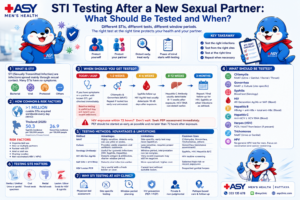
STI Testing After a New Sexual Partner: What to Test & When | Pattaya
STI testing after a new sexual partner is not simply one “full panel” done on one day. Different infections require different samples and have different window periods. Learn what to test, when to test, and when repeat testing may be needed.