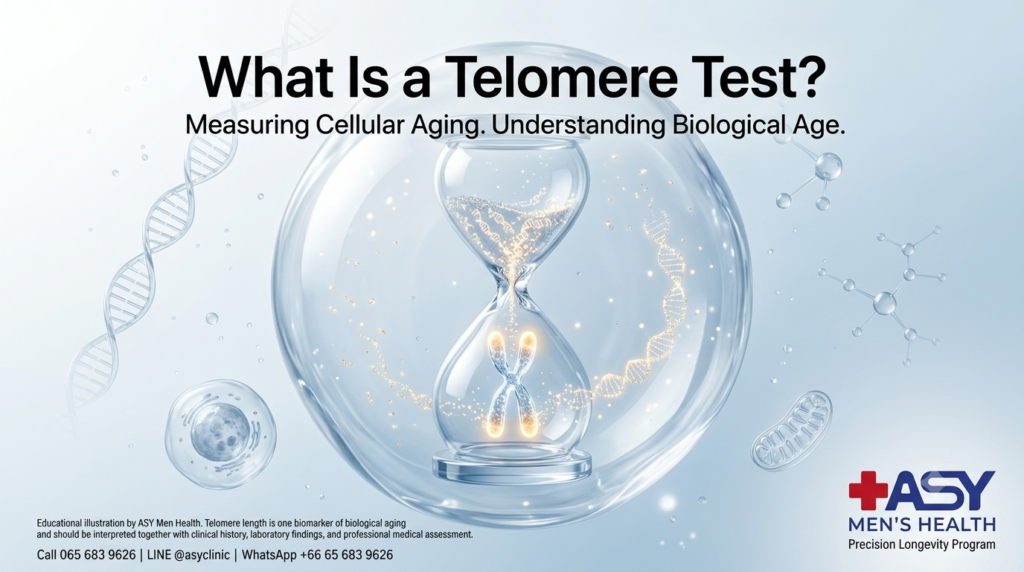
A clinical guide on measuring cellular age, evaluating telomere attrition rates, and implementing precision longevity interventions.
Book ConsultationQuick Summary
- Cellular Molecular Clock: Telomeres are repetitive nucleotide sequences (TTAGGG) located at the ends of chromosomes that act as protective caps. Their length decreases with each round of cell division.
- Biological vs. Chronological Age: While chronological age measures calendar years, a Telomere Test determines your biological age—reflecting the actual functional health and wear of your cells.
- The Hayflick Limit: When telomeres become critically short, cells enter "cellular senescence" (stopping division) or undergo apoptosis, contributing directly to tissue aging and age-related chronic diseases.
- Accelerators of Telomere Shortening: Chronic oxidative stress, systemic inflammation (inflammaging), metabolic dysfunction, smoking, and sleep deprivation significantly accelerate telomere loss.
- Modifiable Trajectory: Telomere attrition is not strictly fixed; precision lifestyle protocols, stress management, caloric balance, and targeted longevity therapies help preserve telomere integrity.
Table of Contents
1. What Is a Telomere Test? 2. The Biology of Telomeres & The Hayflick Limit 3. Chronological Age vs. Biological Age 4. Factors Accelerating Telomere Shortening 5. How Telomere Length Is Measured in Clinical Practice 6. Evidence-Based Protocols for Preserving Telomere Length 7. The ASY Clinic Longevity & Anti-Aging Approach 8. Key Takeaways1. What Is a Telomere Test?
A Telomere Test (Telomere Length Testing) is a specialized bio-molecular blood test that measures the average length of telomeres—the protective caps located at the terminal ends of eukaryotic chromosomes—within your white blood cells (leukocytes).
Because telomere shortening mirrors the overall rate of cellular aging across organ systems, this diagnostic marker serves as one of the most recognized biomarkers of Biological Age and cellular longevity in modern predictive medicine.
2. The Biology of Telomeres & The Hayflick Limit
To understand why telomeres are vital to healthy longevity, imagine the plastic tips (aglets) at the end of shoelaces that prevent them from fraying. Telomeres serve the exact same function for your DNA strands.
Due to the "end-replication problem" during DNA synthesis, a small portion of telomeric DNA is lost every time a cell divides. This biological process leads to several critical physiological milestones:
- Repetitive Sequence Protection: Telomeres consist of repeated
TTAGGGnucleotide pairs that protect essential coding genes from being eroded during division. - The Hayflick Limit: Normal human somatic cells can divide only a limited number of times (typically 50 to 70 times) before telomeres become critically short.
- Cellular Senescence & SASP: Shortened telomeres trigger permanent growth arrest (senescence). Senescent "zombie" cells secrete pro-inflammatory signaling molecules known as the Senescence-Associated Secretory Phenotype (SASP), driving systemic aging.
3. Chronological Age vs. Biological Age
In clinical longevity management, evaluating a patient's healthspan requires separating chronological calendar time from cellular viability:
| Health Parameter | Chronological Age | Biological Age (Telomere Index) |
|---|---|---|
| Definition | The exact number of years elapsed since birth | The physiological age and functional status of your cells |
| Modifiability | Fixed (cannot be changed) | Dynamic (can be slowed or improved via targeted care) |
| Disease Correlation | General demographic marker | Direct indicator of cardiovascular, metabolic & immune risk |
| Primary Driver | Time | Cellular damage, oxidative stress, genetics & lifestyle |
💡 Clinical Insight: Telomerase & Cellular Rejuvenation
Telomerase is a specialized ribonucleoprotein enzyme capable of adding TTAGGG repeats back to chromosome ends. While active in stem cells and germline cells, telomerase activity in adult somatic cells is low. Research in longevity medicine focuses on safely supporting endogenous telomerase activity without inducing uncontrolled cellular proliferation.
4. Factors Accelerating Telomere Shortening
While telomeres naturally shorten with advancing age, lifestyle and environmental stressors can cause premature attrition:
- Oxidative Stress: Excess free radicals break guanine-rich telomeric DNA, accelerating loss during replication cycles.
- Systemic Chronic Inflammation: Elevated inflammatory cytokines (TNF-alpha, IL-6) increase leukocyte turnover, consuming telomere reserves rapidly.
- Metabolic Syndrome & Insulin Resistance: High fasting blood glucose and visceral adiposity are directly linked to shortened leukocyte telomere length (LTL).
- Psychological & Cortisol Stress: Chronic stress elevates cortisol levels, which impairs endogenous telomerase activity and hastens cellular aging.
5. How Telomere Length Is Measured in Clinical Practice
Evaluating telomere integrity requires advanced molecular diagnostic methods:
- qPCR (Quantitative Polymerase Chain Reaction): Measures the relative ratio of telomere repeat copy number to a single-copy gene (T/S ratio), providing a fast, reliable biological age calculation.
- Flow-FISH (Fluorescence In Situ Hybridization with Flow Cytometry): Measures median telomere length within specific blood cell subpopulations (e.g., T-cells, B-cells, granulocytes), offering high diagnostic precision.
6. Evidence-Based Protocols for Preserving Telomere Length
Clinical studies demonstrate that lifestyle interventions can slow down the rate of telomere attrition and enhance biological resilience:
- Aerobic Endurance & High-Intensity Interval Training (HIIT): Zone 2 cardiovascular exercise and intermittent high-intensity training have been shown to increase endogenous telomerase activity in immune cells.
- Nutritional Precision & Antioxidants: Diets rich in polyphenols, Omega-3 fatty acids, Vitamin D3, and dietary antioxidants reduce oxidative damage to telomeric repeats.
- Sleep Architecture Optimization: Maintaining 7–8 hours of restorative deep sleep supports cellular repair mechanisms and suppresses cortisol-driven DNA damage.
- Metabolic & Hormonal Optimization: Balancing insulin sensitivity and optimizing key hormones (e.g., testosterone, thyroid hormones) maintains metabolic stability and supports cellular health.
7. The ASY Clinic Longevity & Anti-Aging Approach
At ASY Clinic, our precision medicine and healthy aging framework integrates Telomere Testing into a complete healthspan program:
- Comprehensive Biological Age Assessment: Combining Telomere Testing with advanced metabolic panels, hormonal profiles, and cardiovascular risk screening.
- Personalized Longevity Roadmaps: Tailored nutritional protocols, medical-grade supplementation, and stress management guidance to protect cellular health.
- Longitudinal Tracking: Monitoring telomere length changes over 12–24 months to evaluate the effectiveness of anti-aging interventions.
8. Key Takeaways
- Precision Cellular Biomarker: Telomere testing measures the protective caps on your DNA to calculate your true biological age.
- Mirrors Overall Healthspan: Shortened telomeres reflect cellular senescence, systemic inflammation, and elevated risks for chronic metabolic conditions.
- Driven by Lifestyle & Environment: Stress, poor sleep, oxidative stress, and inflammation accelerate telomere loss.
- Actionable & Dynamic: Implementing evidence-based lifestyle changes, metabolic management, and targeted interventions can slow telomere attrition and promote vital aging.
Frequently Asked Questions
What is the difference between Chronological Age and Biological Age?
Chronological age is the exact number of years you have been alive based on your birth date. Biological age measures the functional health and wear of your cells and organs, which is heavily influenced by genetics, lifestyle, and telomere length.
How is a Telomere Test performed?
A Telomere Test is performed using a simple venous blood sample. Specialized laboratory techniques (such as qPCR or Flow-FISH) measure the average length of telomeres inside the DNA of your white blood cells (leukocytes).
Can critically short telomeres be lengthened or protected?
While telomere attrition naturally occurs with age, targeted interventions—such as chronic stress reduction, activation of the enzyme telomerase, aerobic endurance exercise, antioxidant diets, and high-quality sleep—can significantly slow attrition rates and protect telomeric cap integrity.
About the Author
Dr. Sirirat Nakdang
นพ. สิริรัฐ นาคแดง
ศัลยแพทย์ทางเดินปัสสาวะและระบบสืบพันธุ์เพศชาย
Urologist & Men's Health Specialist
Sirirat Nakdang, MD
Specialist in Precision Longevity, Biological Age Assessment & Men's Health
Thai Medical License No. ว55466
References
- Blackburn, E. H., Epel, E. S., & Lin, J. (2015). Human telomere biology: A contributory and interactive factor in aging, disease risks, and protection. Science, 350(6265), 1193–1198.
- Werner, C., et al. (2019). Differential effects of endurance, interval, and resistance training on telomerase activity and telomere length. European Heart Journal, 40(1), 34–46.
- Blasco, M. A. (2007). Telomere length, stem cells and aging. Nature Chemical Biology, 3(10), 640–649.
- Cawthon, R. M. (2002). Telomere measurement by quantitative PCR. Nucleic Acids Research, 30(10), e47.
Consultation & Biological Age Assessment
Measure your telomere length and receive a personalized cellular longevity plan at ASY Clinic.
Book Consultation
Painless hematuria
Painless blood in urine (Hematuria) may appear only once and disappear, but it should never be ignored. Learn about possible causes—including stones, prostate conditions, kidney disease and urinary tract cancer—and when to see a urologist.

Peptides and Healthy Aging: Evidence vs Experimental | Peptide Pattaya
Peptides are not automatically experimental. Insulin, GLP-1 medicines, teriparatide and many other peptide drugs are established medical therapies. But many peptides promoted for longevity or anti-aging still lack robust human evidence.
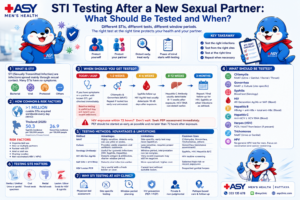
STI Testing After a New Sexual Partner: What to Test & When | Pattaya
STI testing after a new sexual partner is not simply one “full panel” done on one day. Different infections require different samples and have different window periods. Learn what to test, when to test, and when repeat testing may be needed.