
An evidence-based clinical guide on the intersection of male hormone balance, sarcopenia prevention, metabolic longevity, and vital aging.
Book ConsultationQuick Summary
- More Than Sexual Health: Testosterone functions as a core systemic hormone governing metabolic health, muscle mass retention, bone density, cardiovascular regulation, and neurological resilience during aging.
- Combating Sarcopenia: Age-related testosterone decline directly accelerates loss of skeletal muscle mass (sarcopenia) and strength, increasing frailty risks in older adults.
- Metabolic & Heart Health: Optimal testosterone levels enhance insulin sensitivity, reduce visceral adiposity, and protect against metabolic syndrome and cardiovascular decline.
- Cognitive Vitality: Testosterone receptors in the brain support executive function, spatial memory, mood stability, and protection against neurodegenerative decline.
- Precision Longevity Protocol: Evidence-based healthy aging pairs lifestyle optimization (resistance training, nutrition, sleep) with physician-supervised hormone therapy when clinically indicated.
Table of Contents
1. The Biological Connection: Testosterone & Healthy Aging 2. Preserving Skeletal Muscle Mass & Preventing Sarcopenia 3. Bone Mineral Density & Osteoporosis Prevention 4. Cardiometabolic Health & Visceral Fat Regulation 5. Neuroprotective Role & Cognitive Longevity 6. Evidence-Based Hormonal Optimization Protocol 7. The ASY Clinic Healthy Aging & Longevity Approach 8. Key Takeaways1. The Biological Connection: Testosterone & Healthy Aging
Healthy Aging (Healthy Longevity) is defined not merely by extending chronological lifespan, but by maximizing healthspan—the period of life lived free from chronic disease, frailty, and physical dependence.
Starting around age 30, serum total testosterone levels in men decline at a steady rate of approximately 1% per year, while bioavailable (free) testosterone drops even faster due to age-related increases in Sex Hormone-Binding Globulin (SHBG).
This systemic drop—known clinically as Late-Onset Hypogonadism (LOH) or Andropause—plays a central biological role in accelerating the physical and metabolic decline associated with aging.
2. Preserving Skeletal Muscle Mass & Preventing Sarcopenia
One of the primary markers of aging is Sarcopenia—the progressive loss of skeletal muscle mass, quality, and functional strength.
Testosterone is a potent anabolic hormone that stimulates muscle protein synthesis (MPS) via androgen receptor signaling and satellite cell activation. When hormone levels decline:
- Muscle Protein Breakdown Exceeds Synthesis: Leading to rapid loss of type II fast-twitch muscle fibers needed for power and balance.
- Increased Frailty Risk: Sarcopenia significantly increases the incidence of mobility impairment, falls, and loss of independence.
- Metabolic Slowdown: Reduced skeletal muscle mass directly decreases basal metabolic rate (BMR), making fat gain almost inevitable.
3. Bone Mineral Density & Osteoporosis Prevention
Osteoporosis is often mistakenly viewed exclusively as a female health issue, but older men experience significant bone density loss directly linked to androgen deficiency.
Testosterone maintains structural bone integrity through two key pathways: directly by binding to osteoblast androgen receptors to stimulate bone formation, and indirectly via aromatization into Estradiol (E2), which prevents osteoclastic bone resorption.
Maintaining physiological testosterone levels protects men against age-related osteopenia, vertebral compression fractures, and debilitating hip fractures in later life.
💡 Clinical Insight: Muscle & Bone as a Longevity Unit
The musculoskeletal system acts as a mechanical and endocrine engine. Preserving muscle mass through testosterone optimization creates mechanical strain on bones, signaling bone tissue to remain dense and strong throughout the aging process.
4. Cardiometabolic Health & Visceral Fat Regulation
Low testosterone is strongly correlated with metabolic dysfunction, type 2 diabetes, and cardiovascular risk.
| Physiological Parameter | Low Testosterone Impact | Optimized Testosterone Status |
|---|---|---|
| Visceral Fat Storage | Increased abdominal fat accumulation | Enhanced lipolysis and reduced waist circumference |
| Insulin Sensitivity | Insulin resistance & elevated fasting glucose | Improved cellular glucose uptake & HbA1c control |
| Inflammatory Markers | Elevated systemic inflammation (IL-6, TNF-alpha) | Suppressed pro-inflammatory cytokine activity |
| Lipid Profile | Adverse lipid patterns & arterial stiffness | Improved metabolic profile & vascular health |
5. Neuroprotective Role & Cognitive Longevity
The central nervous system contains high concentrations of androgen receptors, particularly in regions governing memory and executive function, such as the hippocampus and prefrontal cortex.
Adequate testosterone levels support cognitive longevity by:
- Promoting Neuroplasticity: Supporting synaptic density and neuronal repair mechanisms.
- Enhancing Mental Clarity: Preventing the characteristic "brain fog," sluggish focus, and memory loss reported in hypogonadal aging men.
- Mood Regulation: Modulating neurotransmitter synthesis (serotonin and dopamine) to reduce late-life irritability, anxiety, and depressive symptoms.
6. Evidence-Based Hormonal Optimization Protocol
Achieving healthy longevity requires a structured, multi-dimensional approach:
- Lifestyle Foundations: Prioritizing heavy progressive resistance training, a protein-adequate Mediterranean diet, stress mitigation, and 7–8 hours of quality sleep.
- Comprehensive Baseline Blood Work: Testing morning Total Testosterone, Free Testosterone, SHBG, Estradiol, Fasting Insulin, Lipid Profile, and PSA.
- Physician-Supervised TRT: When physiological hypogonadism is diagnosed, replacing testosterone under strict urological protocols restores target physiological levels while protecting cardiovascular and prostate health.
7. The ASY Clinic Healthy Aging & Longevity Approach
At ASY Clinic, our urology and precision medicine framework evaluates hormonal health as part of a complete longevity plan:
- Urologist-Led Medical Assessments: Tailored evaluations focused on hormone balance, prostate safety, and metabolic longevity.
- Precision Hormone Restoration: Customized TRT dosing schedules aimed at physiological restoration rather than supraphysiological enhancement.
- Continuous Safety Monitoring: Regular tracking of PSA, Hematocrit, Lipid profiles, and metabolic markers to ensure safe, sustainable aging outcomes.
8. Key Takeaways
- Essential Longevity Marker: Testosterone is a vital systemic hormone regulating muscle, bone, metabolic, and brain health during aging.
- Prevents Age-Related Frailty: Maintaining optimal levels combats sarcopenia, prevents bone loss, and preserves physical independence.
- Protects Metabolic Health: Helps prevent visceral fat accumulation, improves insulin sensitivity, and supports cardiovascular function.
- Medical Supervision Is Essential: Longevity optimization should always be guided by certified specialists using comprehensive laboratory testing and safety protocols.
Frequently Asked Questions
Is testosterone optimization purely for anti-aging aesthetics?
No. Hormonal optimization in healthy aging focuses on metabolic balance, preserving lean muscle tissue, preventing osteoporotic fractures, maintaining cognitive clarity, and reducing cardiovascular risks, rather than cosmetic outcomes.
Can lifestyle changes naturally support testosterone during aging?
Yes. Progressive resistance training, maintaining low visceral fat, optimizing sleep architecture (7-8 hours), and reducing chronic inflammatory stressors significantly help maintain endogenously produced testosterone.
At what age should men start monitoring their testosterone levels?
Establishing a baseline hormone profile around age 30 to 35 allows urologists to track longitudinal health trends and intervene early if clinical hypogonadism or accelerated hormonal decline occurs.
About the Author
Dr. Sirirat Nakdang
นพ. สิริรัฐ นาคแดง
ศัลยแพทย์ทางเดินปัสสาวะและระบบสืบพันธุ์เพศชาย
Urologist & Men's Health Specialist
Sirirat Nakdang, MD
Specialist in Male Hormonal Optimization, Urology & Precision Longevity
Thai Medical License No. ว55466
References
- Bhasin, S., et al. (2018). Testosterone Therapy in Men With Hypogonadism: An Endocrine Society Clinical Practice Guideline. The Journal of Clinical Endocrinology & Metabolism, 103(5), 1715–1744.
- Snyder, P. J., et al. (2016). Effects of Testosterone Treatment in Older Men (The Testosterone Trials). The New England Journal of Medicine, 374(7), 611–624.
- Corona, G., et al. (2020). Sarcopenia and male hypogonadism: A systematic review and meta-analysis. Andrology, 8(6), 1467–1478.
- Morgentaler, A., et al. (2016). Diagnosis and Management of Testosterone Deficiency: Summary of Clinical Guidelines. Mayo Clinic Proceedings, 91(8), 1081–1096.
Consultation & Longevity Hormone Screening
Optimize your hormonal health, energy, and long-term vitality with specialist medical care at ASY Clinic.
Book Consultation
Painless hematuria
Painless blood in urine (Hematuria) may appear only once and disappear, but it should never be ignored. Learn about possible causes—including stones, prostate conditions, kidney disease and urinary tract cancer—and when to see a urologist.
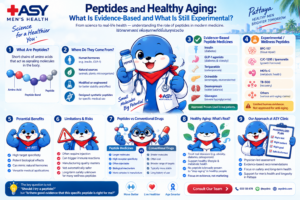
Peptides and Healthy Aging: Evidence vs Experimental | Peptide Pattaya
Peptides are not automatically experimental. Insulin, GLP-1 medicines, teriparatide and many other peptide drugs are established medical therapies. But many peptides promoted for longevity or anti-aging still lack robust human evidence.
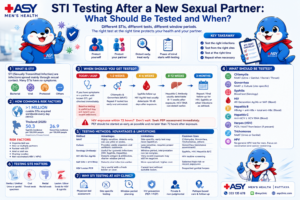
STI Testing After a New Sexual Partner: What to Test & When | Pattaya
STI testing after a new sexual partner is not simply one “full panel” done on one day. Different infections require different samples and have different window periods. Learn what to test, when to test, and when repeat testing may be needed.