
Finasteride
Generic Name: Finasteride (Common Brands: Propecia, Proscar)
A potent type II 5-alpha reductase inhibitor designed to block the conversion of testosterone into dihydrotestosterone (DHT), effectively halting male pattern hair loss and shrinking enlarged prostate tissue in benign prostatic hyperplasia (BPH).
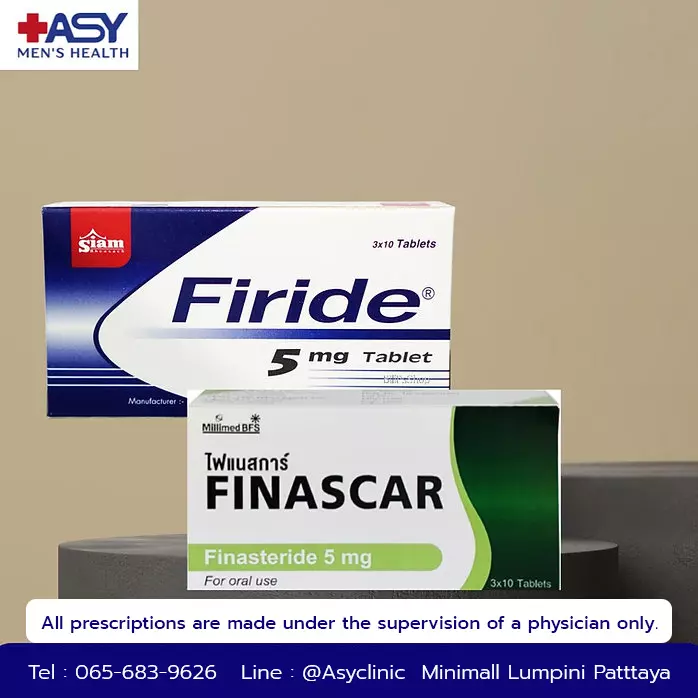 ASY Clinic Clinical Center
Strictly Physician-Prescribed Regimen
What is Finasteride?
Finasteride is a synthetic 4-androsten-3-one derivative that specifically inhibits type II 5-alpha-reductase, the intracellular enzyme responsible for converting testosterone into the potent androgen dihydrotestosterone (DHT). Elevated DHT levels are the primary hormonal driver behind both androgenetic alopecia (male pattern baldness) and the abnormal cellular proliferation of the prostate gland in BPH.
Mechanism of Action: By suppressing circulating and tissue-level DHT by up to 70%, finasteride halts miniaturization of hair follicles on the scalp and gradually reduces enlarged prostate volume, relieving urinary obstruction symptoms over time.
Who May Benefit from Finasteride?
Finasteride is prescribed for adult males presenting with specific androgen-mediated conditions. Ideal candidates include:
- Male Pattern Hair Loss: Men experiencing mild-to-moderate vertex and anterior mid-scalp thinning (Androgenetic Alopecia).
- Benign Prostatic Hyperplasia: Patients with an enlarged prostate needing long-term reduction in gland volume.
- Urinary Symptom Relief: Men seeking to decrease the risk of acute urinary retention and minimize the need for prostate surgery.
- Combination Therapy: Patients requiring combined alpha-blocker and 5-ARI protocols for comprehensive BPH management.
- Consistent Dailies: Individuals committed to a long-term daily maintenance schedule.
- Evaluated Candidates: Patients cleared through clinical screening by a board-certified physician.
Primary Therapeutic Benefits
Proven outcomes in hair restoration and prostate health supported by global clinical trials.
Hair Loss Arrest
Significantly halts further hair thinning and stimulates new hair growth across treated scalp regions.
Prostate Volume Reduction
Gradually shrinks enlarged prostate tissue over months of therapy, easing lower urinary tract symptoms.
Sustained DHT Suppression
Maintains stable, low tissue DHT levels with once-daily dosing to protect hair follicles and prostate integrity.
Dosage & Administration
Educational Notice: The following dosing specifications are for informational purposes and do not replace personalized medical orders from your physician.
Indication-Based Dosing
- Hair Loss (Propecia): 1 mg tablet taken orally once daily.
- BPH (Proscar): 5 mg tablet taken orally once daily.
- Food Interaction: Can be taken with or without food consistently at the same time each day.
Handling & Safety Precaution
- Pregnancy Warning: Crushed or broken tablets must not be handled by pregnant women or women of childbearing potential due to risk of fetal abnormalities.
- Missed Dose: Take as soon as remembered. Skip if close to the next scheduled dose. Never double up.
Possible Side Effects
While finasteride is generally well-tolerated, specific side effects can occur depending on individual physiology.
| Category | Reported Symptoms & Manifestations |
|---|---|
| Sexual Wellness | Decreased libido, erectile dysfunction, or reduced ejaculate volume in a small percentage of patients. |
| Breast Tenderness | Gynecomastia (breast tenderness or enlargement) occasionally reported during extended treatment. |
| Lab Alterations | Reduction in serum Prostate-Specific Antigen (PSA) levels by approximately 50%, which must be factored into prostate cancer screenings. |
| Emergency Symptoms | Severe allergic reactions (rash, itching, swelling of lips/face) or breast lumps/discharge. Seek immediate medical attention. |
Drug Interactions & Precautions
Finasteride undergoes hepatic metabolism primarily via the CYP3A4 enzyme system. Full disclosure of your complete medication list and medical history is essential.
- CYP3A4 Inhibitors: Potent inhibitors like ketoconazole may moderately affect finasteride clearance.
- Female Contraindication: Strictly contraindicated in women, particularly those who are pregnant or may become pregnant.
- Blood Donation: Patients taking finasteride should not donate blood until at least one month after their final dose to prevent exposing pregnant transfusion recipients.
Frequently Asked Questions
Expert answers regarding finasteride usage, efficacy, and clinical protocols.
Visible improvements in hair density and reduction in hair shedding typically require 3 to 6 months of continuous daily use, as hair growth cycles occur gradually.
The 1 mg dose (Propecia) is specifically indicated for male pattern hair loss, whereas the 5 mg dose (Proscar) is formulated for shrinking enlarged prostates in BPH.
No. Finasteride is strictly contraindicated for women, especially those who are pregnant or planning pregnancy, due to the high risk of causing birth defects in male fetuses.
If you discontinue finasteride, DHT levels return to baseline within weeks. Hair loss will typically resume, and prostate volume will expand back to its untreated state within 6 to 12 months.
Yes. Finasteride lowers serum PSA levels by roughly 50%. Your physician will double your measured PSA value to properly evaluate prostate cancer screening markers.
In clinical trials, sexual side effects occurred in a small percentage of patients and typically resolved upon discontinuing treatment or, in many cases, even with continued use.
While some physicians prescribe pill-splitting for cost efficiency, tablets must be handled with extreme care to avoid skin contact by women of childbearing potential.
Finasteride manages and slows down hair loss effectively, but it is not a permanent cure. Ongoing maintenance therapy is required to sustain hair growth benefits.
Yes. Combining oral finasteride with topical or oral minoxidil is a widely adopted dual-mechanism approach to maximize hair restoration results.
Yes. Finasteride is a prescription-only medication requiring clinical assessment by a qualified physician to ensure safety and appropriateness.
Finasteride can be taken at any time of day, with or without food. Sticking to the same time each day helps maintain stable blood concentrations.
Hair loss and prostate conditions stem from various causes. A professional consultation ensures accurate diagnosis, safe dosing, and proper ongoing monitoring.
Dutasteride
Dual Type I/II 5-alpha reductase inhibitor achieving maximum DHT suppression for hair loss and BPH.
Minoxidil
Topical and oral vasodilator stimulating anagen phase hair growth in androgenetic alopecia.
Tamsulosin
Uro-selective alpha-1 blocker providing rapid relief of BPH symptoms alongside 5-ARIs.
Alfuzosin
Extended-release alpha blocker designed to relax prostate smooth muscle and improve urine flow.
Silodosin
Highly selective alpha-1A blocker for effective targeted management of lower urinary tract symptoms.
Related Medical Articles
Deepen your understanding of hair restoration and prostate health.
Understanding Male Pattern Baldness
Comprehensive overview of androgenetic alopecia causes, stages, and modern treatment approaches.
Benign Prostatic Hyperplasia (BPH)
Exploring prostate enlargement symptoms, diagnostics, and long-term medical management strategies.
PSA Testing & Prostate Health
How 5-ARIs like finasteride impact prostate-specific antigen blood test interpretations.
Clinical References & Guidelines
- Adil, A., & Godwin, M. (2017). The effectiveness of treatments for androgenetic alopecia: A systematic review and meta-analysis. Journal of the American Academy of Dermatology, 77(1), 136-141.
- McVary, K. T., et al. (2010; Periodic Review). Management of Benign Prostatic Hyperplasia (BPH). American Urological Association (AUA) Guideline.
- U.S. Food and Drug Administration (FDA). Finasteride Prescribing Information & Safety Data.
- Roehrborn, C. G., et al. (2002). The effects of combination therapy with finasteride and doxazosin on clinical progression of benign prostatic hyperplasia. New England Journal of Medicine, 349(3), 238-246.
Prescription medications require formal physician consultation and professional medical evaluation. ASY Clinic does not sell prescription medication online, nor do we process online purchases, checkouts, or orders. Treatment recommendations are individualized based on clinical examination. This content is intended strictly for educational purposes and should never replace professional medical advice, diagnosis, or treatment.