
Alfuzosin
Generic Name: Alfuzosin (Common Brand: Uroxatral)
An uroselective alpha-1 adrenergic receptor antagonist engineered to relax smooth muscle tissue in the prostate and bladder neck, delivering smooth, sustained relief of lower urinary tract symptoms (LUTS) due to benign prostatic hyperplasia (BPH).
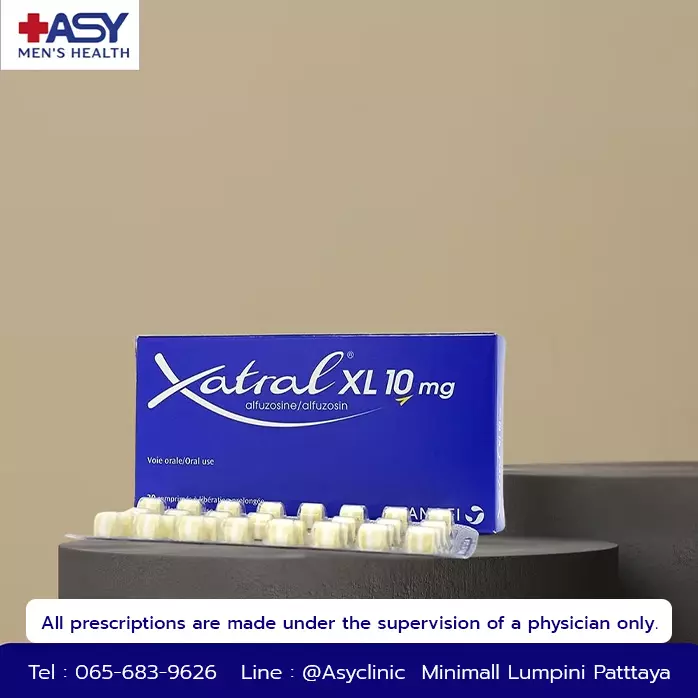 ASY Clinic Clinical Center
Strictly Physician-Prescribed Regimen
What is Alfuzosin?
Alfuzosin is a selective alpha-1 adrenergic receptor antagonist utilized to manage the signs and symptoms of Benign Prostatic Hyperplasia (BPH). It works by relaxing the smooth muscle of the prostate and bladder neck, making urination easier and reducing urinary hesitancy and frequency.
Mechanism of Action: Alfuzosin exhibits high selectivity for alpha-1 adrenergic receptors located in the lower urinary tract. By blocking these receptors, it diminishes smooth muscle tone in the prostate capsule and urethra, reducing resistance to urinary outflow without requiring dose titration in most adult patients.
Who May Benefit from Alfuzosin?
Urologists prescribe alfuzosin for adult male patients experiencing moderate-to-severe lower urinary tract symptoms resulting from benign prostatic enlargement. Ideal candidates include:
- Benign Prostatic Hyperplasia: Men diagnosed with prostate enlargement causing urinary obstruction.
- Voiding Difficulties: Patients dealing with weak stream, intermittency, and straining.
- Storage Symptoms: Individuals affected by urinary urgency and frequent nighttime urination.
- Cardiovascular Profile: Patients seeking an alpha-blocker with a favorable uroselective hemodynamic profile.
- Once-Daily Convenience: Men requiring a steady extended-release dosing regimen.
- Evaluated Candidates: Patients cleared through clinical assessment by a board-certified urologist.
Primary Therapeutic Benefits
Targeted urological outcomes supported by global clinical data.
Uro-Selectivity
Targets prostate and bladder neck smooth muscle receptors effectively while minimizing systemic vascular side effects.
Improved Flow Rate
Substantially reduces outlet resistance, facilitating a stronger, consistent urine stream and reducing residual urine volume.
Better Sleep Continuity
Decreases nighttime waking episodes (nocturia) and sudden urinary urgency, enhancing daily quality of life.
Dosage & Administration
Educational Notice: The following dosing specifications are for informational purposes and do not replace personalized medical orders from your physician.
Typical Dosing
- Standard Adult Dose: 10 mg extended-release tablet once daily.
- Administration Rule: Must be swallowed whole with food (never crushed, chewed, or split).
- Timing: Take with the same meal each day to maintain consistent drug absorption.
Missed Dose & Storage
- Missed Dose: Take with food as soon as remembered on that same day. Skip if forgotten until the next scheduled mealtime. Never double doses.
- Storage: Store at controlled room temperature away from moisture and heat. Keep out of reach of children.
Possible Side Effects
While alfuzosin is generally well-tolerated, specific side effects can occur depending on individual physiology.
| Category | Reported Symptoms & Manifestations |
|---|---|
| Common Effects | Dizziness, headache, fatigue, upper respiratory tract infection, and asthenia. |
| Orthostatic Symptoms | Lightheadedness or postural hypotension when rising quickly from a seated or lying position. |
| Ocular Warnings | Intraoperative Floppy Iris Syndrome (IFIS) during cataract surgery in patients taking alpha-blockers. |
| Emergency Symptoms | Severe allergic reactions (hives, facial swelling, breathing difficulty) or prolonged painful erection (priapism). Seek immediate medical attention. |
Drug Interactions & Precautions
Alfuzosin can interact with various pharmaceutical agents. Full disclosure of your complete medication list and medical history to your urologist is critical.
- Strong CYP3A4 Inhibitors: Medications like ketoconazole, itraconazole, or ritonavir can significantly elevate alfuzosin blood levels and are contraindicated.
- Other Alpha-Blockers: Combining alfuzosin with other alpha-adrenergic antagonists increases the risk of severe hypotension and dizziness.
- Blood Pressure Lowering Agents: Concurrent use with antihypertensives or PDE5 inhibitors requires careful monitoring due to potential additive blood pressure reduction.
Frequently Asked Questions
Expert answers regarding alfuzosin usage, efficacy, and clinical protocols.
Alfuzosin typically provides noticeable improvement in urinary flow within several days of starting treatment, with full therapeutic benefits realized within 1 to 2 weeks of consistent daily dosing.
Taking alfuzosin with food is essential because food enhances the bioavailability and steady-state absorption of the extended-release tablet.
No. Alfuzosin tablets are formulated for extended release. Crushing, chewing, or splitting them destroys the extended-release mechanism, leading to a sudden release of medication into the bloodstream.
No. Alfuzosin relaxes smooth muscle to eliminate urinary obstruction, but it does not reduce the physical size of the prostate gland. For volume reduction, urologists may combine it with a 5-ARI.
Yes, like other alpha-blockers, alfuzosin can occasionally cause orthostatic hypotension or lightheadedness, particularly when standing up quickly after taking the medication.
No. Alfuzosin is a prescription-only medication that requires formal clinical evaluation and a prescription from a qualified urologist or physician.
Discontinuing alfuzosin abruptly will cause urinary obstruction and symptoms to return. Always consult your urologist before modifying or stopping your regimen.
Both are uroselective alpha-blockers for BPH, but they have distinct pharmacokinetic profiles. Your urologist selects the most appropriate agent based on your individual medical profile.
Take the missed dose with food on that same day. If you remember the following day, skip the missed dose and resume your normal schedule. Never take two doses at once.
Yes. Periodic urological follow-ups ensure that your treatment remains effective, your symptom scores improve appropriately, and your overall prostate health is monitored.
Yes. Combining alfuzosin with a 5-alpha reductase inhibitor like finasteride or dutasteride is a standard combination therapy for men with enlarged prostates and significant symptoms.
Lower urinary tract symptoms can originate from multiple causes requiring distinct treatments. A board-certified urologist provides accurate diagnosis and safe, customized prescription therapy.
Tamsulosin
Widely prescribed uro-selective alpha-1 blocker for swift relief of BPH and lower urinary tract symptoms.
Silodosin
Highly selective alpha-1A adrenergic blocker engineered for robust targeted relief of BPH and LUTS.
Doxazosin
Long-acting alpha blocker indicated when BPH symptoms coincide with essential hypertension.
Finasteride
Type II 5-alpha reductase inhibitor that physically shrinks enlarged prostate volume over time.
Dutasteride
Dual Type I/II 5-ARI achieving maximal DHT suppression for comprehensive prostate reduction.
Related Medical Articles
Deepen your understanding of prostate health and diagnostic evaluations.
Understanding BPH
Comprehensive overview of benign prostatic hyperplasia causes, symptoms, and modern management strategies.
Lower Urinary Tract Symptoms (LUTS)
Identifying voiding and storage symptoms and determining when to seek specialist urological care.
PSA Testing & Prostate Health
The role of Prostate-Specific Antigen blood tests in screening and monitoring urological health.
Clinical References & Guidelines
- Gravas, S., et al. (2024). Guidelines on the Management of Non-Neurogenic Male Lower Urinary Tract Symptoms (LUTS). European Association of Urology (EAU).
- McVary, K. T., et al. (2010; Periodic Review). Management of Benign Prostatic Hyperplasia (BPH). American Urological Association (AUA) Guideline.
- U.S. Food and Drug Administration (FDA). Alfuzosin Prescribing Information & Safety Data.
- Roehrborn, C. G., et al. (2006). Efficacy and safety of alfuzosin 10 mg once daily in the treatment of symptomatic benign prostatic hyperplasia. Urology, 67(1), 95-99.
Prescription medications require formal physician consultation and professional medical evaluation. ASY Clinic does not sell prescription medication online, nor do we process online purchases, checkouts, or orders. Treatment recommendations are individualized based on clinical examination. This content is intended strictly for educational purposes and should never replace professional medical advice, diagnosis, or treatment.