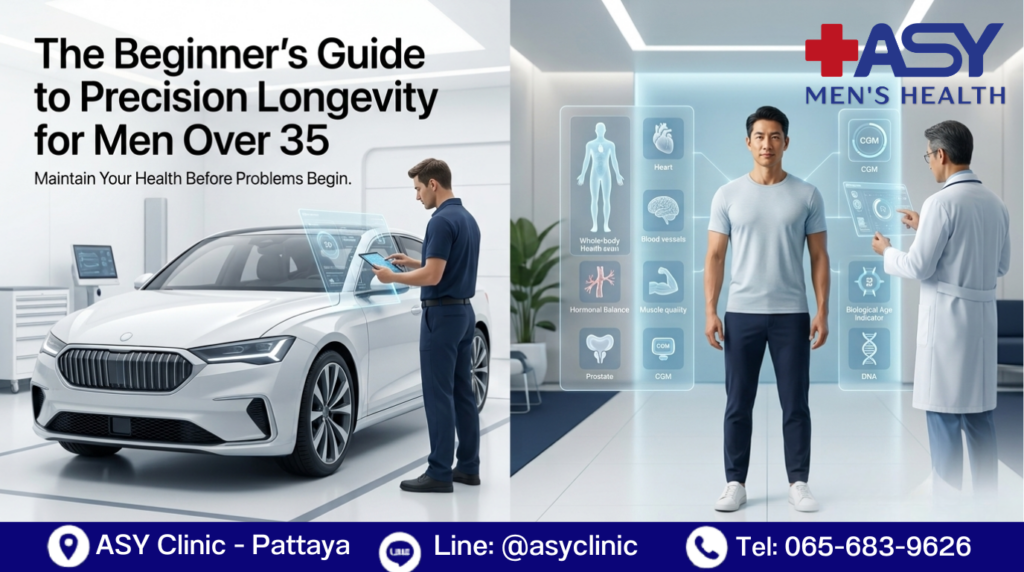
A clinical framework for proactive men's health: extending healthspan, reversing cellular degradation, and optimizing physical performance.
Book ConsultationQuick Summary
- Shift Target from Lifespan to Healthspan: Adding years to life is meaningless without vitality. The modern longevity paradigm focuses on extending the years lived free from chronic disease, disability, and cognitive decline.
- The 35+ Biological Shift: Entering your mid-30s marks the onset of progressive age-related changes—including a ~1% annual drop in testosterone, muscle loss (sarcopenia), insulin resistance, and cellular senescence.
- The 4 Pillars of Precision Longevity: Built upon individualized exercise protocols (Zone 2 & VO2 Max), metabolic & nutritional optimization, restorative sleep architecture, and physician-supervised hormonal balance.
- Objective Biomarker Tracking: Replaces subjective wellness advice with actionable metrics: VO2 Max, Visceral Adipose Tissue (VAT), Telomere Length, Apolipoprotein B (ApoB), and Free Testosterone.
Table of Contents
1. Why Men Aged 35+ Must Transition to Precision Longevity 2. Lifespan vs. Healthspan: Defining the Paradigm 3. Five Core Biomarkers Every Man 35+ Must Track 4. The 4 Pillars of a Precision Longevity Protocol 5. Comparison: Traditional Medicine vs. Precision Longevity 6. Clinical Pitfalls & Common Mistakes 7. Summary & Actionable Next Steps1. Why Men Aged 35+ Must Transition to Precision Longevity
Passing the age threshold of 35 represents a critical biological turning point for men. While outward performance and energy may appear unchanged, underlying molecular processes begin a steady trajectory of decline:
- Endocrine Slowdown: Total and Free Testosterone levels decrease by approximately 1% per year, accompanied by subtle rises in Sex Hormone-Binding Globulin (SHBG).
- Subclinical Sarcopenia: Without targeted hypertrophy and resistance training, men lose 3% to 8% of muscle mass per decade after age 30.
- Visceral Adipose Accumulation: Declining basal metabolic rates encourage deep visceral fat deposition, releasing pro-inflammatory cytokines into circulation.
- Cellular Senescence & Dysfunction: Damaged cells stop dividing but fail to clear out ("zombie cells"), creating a chronic state of low-grade systemic inflammation known as inflammaging.
Precision Longevity abandons generic, one-size-fits-all medical advice. Instead, it leverages personalized biological diagnostics to intercept disease pathways years before symptoms manifest.
2. Lifespan vs. Healthspan: Defining the Paradigm
Understanding the distinction between these two metrics is foundational to modern anti-aging medicine:
- Lifespan: The total duration of time an individual remains alive (from birth to death).
- Healthspan: The period of life spent in optimal physical, cognitive, and metabolic health—completely free from chronic disease and functional dependency.
Currently, the average male experiences a healthspan gap of 10 to 15 years—spending the final decade of life suffering from cardiovascular disease, metabolic syndrome, neurodegeneration, or severe frailty. Precision Longevity aims to compress morbidity, extending healthspan so that it closely aligns with total lifespan.
3. Five Core Biomarkers Every Man 35+ Must Track
Data-driven longevity relies on tracking precise, actionable biological parameters rather than relying on standard routine screening:
1) VO2 Max (Cardiorespiratory Fitness)
VO2 Max measures the maximum volume of oxygen your body can utilize during intense exercise. It is widely recognized as one of the single strongest independent predictors of all-cause mortality. Individuals in the top 2.5% for VO2 Max exhibit vastly lower mortality risks compared to low-fitness peers.
2) Telomere Length & Epigenetic Clocks (Biological Age)
Measuring leukocyte telomere length or DNA methylation patterns reveals your true Biological Age, determining whether your cellular clock is aging faster or slower than your calendar age.
3) Visceral Adipose Tissue (VAT / DEXA Analysis)
Quantitative measurement of deep abdominal fat via DEXA scans. Unlike subcutaneous fat, VAT is an active endocrine tissue that triggers insulin resistance and vascular wall degradation.
4) Comprehensive Hormone Panel
Going beyond simple screening to evaluate Total Testosterone, Free Testosterone (calculated via equilibrium dialysis), SHBG, DHEA-S, Estradiol, and Thyroid hormones to achieve optimal physiological performance.
5) Advanced Lipid & Inflammatory Panel
Evaluating Apolipoprotein B (ApoB) to measure the exact number of atherogenic particles carrying plaque into arterial walls, paired with **hs-CRP** for systemic arterial inflammation.
4. The 4 Pillars of a Precision Longevity Protocol
Achieving sustained vitality requires structured interventions across four core lifestyle domains:
-
Cardiorespiratory & Resistance Exercise:
- Zone 2 Endurance Training: Low-intensity aerobic exercise (60–70% Max Heart Rate) for 150–200 minutes weekly to expand mitochondrial density and metabolic efficiency.
- VO2 Max HIIT Protocols: High-intensity interval sessions once weekly to push peak aerobic capacity.
- Heavy Compound Strength Training: Progressive resistance training 3–4 days weekly to stimulate muscle protein synthesis and bone density.
-
Precision Nutrition & Metabolic Flexibility:
- Prioritizing high-quality protein (1.6–2.2 grams per kg of body weight daily) to maintain lean mass.
- Eliminating refined carbohydrates and ultra-processed foods to maintain peak insulin sensitivity.
- Integrating Omega-3 fatty acids and dietary fibers to preserve gut microbiome diversity.
-
Sleep Architecture Optimization:
- Consistently securing 7–9 hours of high-quality sleep to enable Glymphatic brain detoxification and nocturnal growth hormone release.
- Establishing daily circadian alignment through immediate sunlight exposure upon waking.
-
Targeted Endocrine & Supplement Interventions:
- Physician-managed Testosterone Replacement Therapy (TRT) when clinical hypogonadism is diagnosed.
- Evidence-based medical supplementation guided by blood laboratory diagnostics (e.g., Vitamin D3/K2, Omega-3s, CoQ10, Magnesium glycinate).
💡 Clinical Insight: Optimal Ranges vs. Reference Ranges
Standard laboratory reference ranges ("Normal Ranges") are statistically calculated from broad population samples, which frequently include individuals with subclinical chronic illness or obesity. In Precision Longevity, clinicians target **Optimal Ranges**—physiological thresholds associated with peak cellular function and minimal disease incidence (e.g., maintaining Fasting Insulin below 5 µIU/mL and ApoB below 80 mg/dL).
5. Comparison: Traditional Medicine vs. Precision Longevity
| Clinical Dimension | Traditional Medicine (Reactive) | Precision Longevity (Proactive) |
|---|---|---|
| Core Philosophy | Treats established disease symptoms | Intercepts cellular decline before disease occurs |
| Primary Objective | Symptom control to extend Lifespan | Cellular optimization to maximize Healthspan |
| Diagnostic Scope | Basic screening (Fasting glucose, Basic Lipid) | Advanced panels (ApoB, VO2 Max, Telomeres, Free T) |
| Evaluation Criteria | Population-based Normal Ranges | Individualized Optimal Ranges |
| Intervention Strategy | Standardized disease protocols | Tailored multi-pillar lifestyle & medical plans |
6. Clinical Pitfalls & Common Mistakes
Men embarking on anti-aging programs frequently encounter counterproductive pitfalls:
- Unsupervised Supplement Stacking: Consuming high-dose random supplements without diagnostic baseline testing risks renal or hepatic toxicity and oxidative imbalance.
- Self-Administered Anabolic/TRT Regimens: Using androgenic compounds without medical oversight causes severe polycythemia, testicular atrophy, and cardiovascular strain.
- Overtraining Without Adequate Recovery: Excessive high-intensity exercise paired with poor sleep elevates baseline cortisol, accelerating cellular catabolism and fatigue.
- Focusing Entirely on Physical Appearance: Muscular hypertrophy does not guarantee arterial health; vascular biomarkers (ApoB) must be managed alongside physical fitness.
7. Summary & Actionable Next Steps
Initiating a Precision Longevity framework at age 35+ represents a vital investment in your future autonomy, vigor, and performance. Longevity is not achieved through quick fixes or unproven remedies, but through methodical biological diagnostics paired with disciplined lifestyle execution.
Begin by establishing your baseline biological parameters, analyzing deep metabolic and hormonal panels, and consulting a specialist to build your personal healthspan strategy.
Frequently Asked Questions
Why should men start Precision Longevity protocols at age 35?
Around age 35, testosterone levels begin declining by approximately 1% annually, accompanied by subclinical cellular aging (senescence), gradual muscle mass loss, and visceral fat accumulation. Early intervention preserves metabolic resilience, cardiovascular strength, and hormonal balance.
What are the most essential biomarkers to track for men 35+?
Key biomarkers include: 1) Cardiorespiratory fitness (VO2 Max), 2) Biological age markers (Telomere Length & Epigenetics), 3) Visceral fat burden (DEXA scan), 4) Hormone profiles (Total & Free Testosterone), and 5) Advanced cardiovascular/metabolic panels (ApoB, hs-CRP, Fasting Insulin).
What is the primary difference between Lifespan and Healthspan?
Lifespan refers to the total number of years an individual lives. Healthspan represents the period of life spent in optimal health, free from chronic diseases and functional decline. Precision Longevity aims to extend Healthspan to match Lifespan.
References
- Attia, P., & Gifford, B. (2023). Outlive: The Science and Art of Longevity. Harmony Books.
- Lopez-Otin, C., Blasco, M. A., Partridge, L., Serrano, M., & Kroemer, G. (2023). Hallmarks of aging: An expanding universe. Cell, 186(2), 243-278.
- Mandsager, K., Harb, S., Cremer, P., Phelan, D., Nissen, S. E., & Jaber, W. (2018). Association of cardiorespiratory fitness with long-term mortality among adults undergoing exercise treadmill testing. JAMA Network Open, 1(6), e183605.
- Bhasin, S., et al. (2018). Testosterone Therapy in Men With Hypogonadism: An Endocrine Society Clinical Practice Guideline. The Journal of Clinical Endocrinology & Metabolism, 103(5), 1715–1744.
Consultation & Precision Longevity Roadmap
Assess your biological age, evaluate hormone profiles, and receive a customized healthspan strategy at ASY Clinic.
Book Consultation
Painless hematuria
Painless blood in urine (Hematuria) may appear only once and disappear, but it should never be ignored. Learn about possible causes—including stones, prostate conditions, kidney disease and urinary tract cancer—and when to see a urologist.
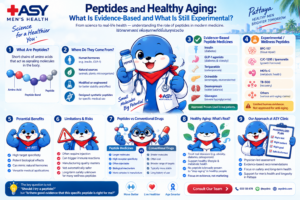
Peptides and Healthy Aging: Evidence vs Experimental | Peptide Pattaya
Peptides are not automatically experimental. Insulin, GLP-1 medicines, teriparatide and many other peptide drugs are established medical therapies. But many peptides promoted for longevity or anti-aging still lack robust human evidence.
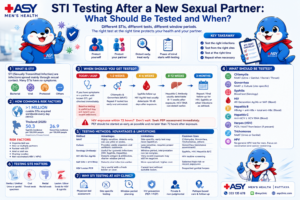
STI Testing After a New Sexual Partner: What to Test & When | Pattaya
STI testing after a new sexual partner is not simply one “full panel” done on one day. Different infections require different samples and have different window periods. Learn what to test, when to test, and when repeat testing may be needed.