Peptides and Healthy Aging: What Is Evidence-Based and What Is Still Experimental?
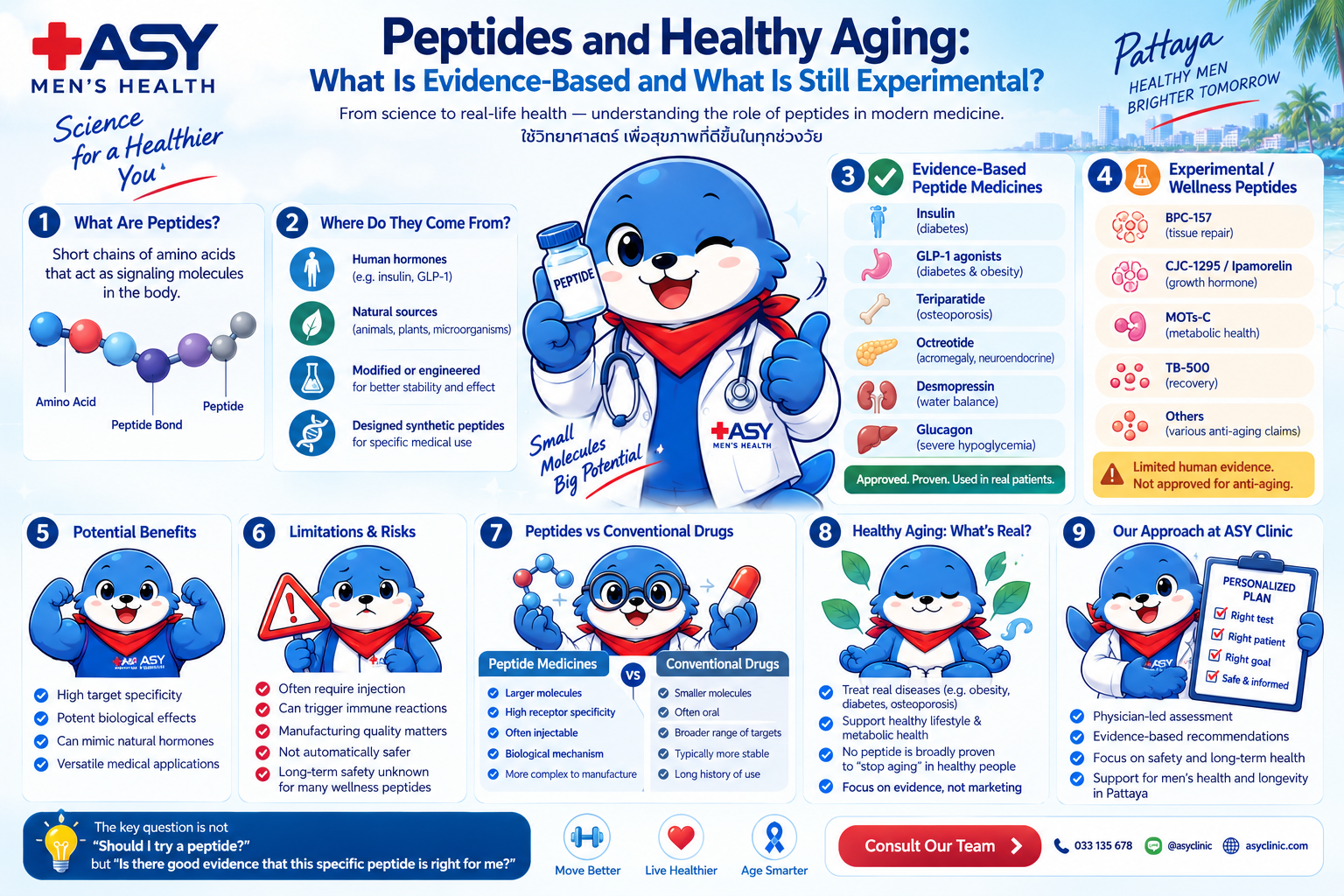
The word “peptide” is increasingly used in longevity and wellness medicine. But there is an important distinction: some peptides are well-established prescription medicines, while others promoted for anti-aging remain experimental.
ASY Clinic Pattaya
What Is a Peptide?
A peptide is a molecule made from amino acids linked together by peptide bonds. Amino acids are the same fundamental building blocks used to make proteins.
TH Peptide คือโมเลกุลที่ประกอบจาก amino acid หลายตัว เชื่อมต่อกันด้วย peptide bond ซึ่ง amino acid เหล่านี้เป็นหน่วยพื้นฐานเดียวกับที่ร่างกายใช้สร้าง protein
In practical pharmacology, peptides generally sit somewhere between very small chemical drugs and much larger biological proteins. Their exact definition can vary slightly depending on the scientific or regulatory context.
TH หากมองในด้าน pharmacology peptide มักอยู่ตรงกลางระหว่าง small-molecule drug ที่มีขนาดเล็กมาก กับ protein หรือ biologic ที่มีโครงสร้างใหญ่และซับซ้อนกว่า
The human body naturally produces many peptides. They act as hormones, neurotransmitters, signaling molecules and regulators of metabolism, growth, appetite, inflammation and multiple other physiological processes.
TH ร่างกายมนุษย์สร้าง peptide ตามธรรมชาติจำนวนมาก โดยทำหน้าที่เป็น hormone, neurotransmitter และ signaling molecule ที่ควบคุมการเผาผลาญ การเจริญเติบโต ความอยากอาหาร รวมถึงระบบต่าง ๆ ของร่างกาย
Where Do Medical Peptides Come From?
Modern peptide medicines do not all come from one source. Some are based directly on natural human hormones, while others are modified or completely engineered versions designed to improve stability, selectivity or duration of action.
TH ยากลุ่ม peptide ในปัจจุบันไม่ได้มีต้นกำเนิดแบบเดียว บางชนิดพัฒนาจาก hormone ของมนุษย์โดยตรง บางชนิดถูกดัดแปลงโครงสร้าง เพื่อให้อยู่ในร่างกายได้นานขึ้น จับ receptor ได้ดีขึ้น หรือใช้สะดวกขึ้น
A good example is the incretin field. Native GLP-1 is rapidly degraded in the body, so modern GLP-1 medicines were engineered to remain active much longer and therefore become practical clinical therapies.
TH ตัวอย่างที่เห็นภาพชัดคือ GLP-1 เพราะ GLP-1 ตามธรรมชาติถูกสลายค่อนข้างเร็ว นักวิทยาศาสตร์จึงดัดแปลงโมเลกุล ให้มี half-life ยาวขึ้นจนสามารถนำมาใช้รักษาโรคได้จริง
Are Peptides Accepted in Modern Medicine?
Absolutely — but this statement needs an important qualification. Specific peptide drugs are accepted when their specific indication has been supported by appropriate clinical evidence.
TH คำตอบคือใช่ แต่ต้องพูดให้ถูกว่า peptide แต่ละชนิดได้รับการยอมรับตามข้อบ่งใช้ของมันเอง ไม่ใช่ว่าเพียงเพราะสารนั้นเป็น peptide แล้วจะถือว่ามีประสิทธิภาพสำหรับทุกโรค
Peptide therapeutics are not new. Insulin transformed diabetes care in the 1920s, and peptide drugs are now used across endocrinology, metabolic medicine, osteoporosis, oncology, reproductive medicine and other specialties.
TH Peptide medicine ไม่ใช่เรื่องใหม่ insulin ถูกนำมาใช้รักษาเบาหวานมาตั้งแต่ช่วงทศวรรษ 1920 และปัจจุบัน peptide drug ถูกใช้ในหลายสาขา ตั้งแต่เบาหวาน โรคอ้วน กระดูกพรุน ต่อมไร้ท่อ ไปจนถึง oncology
The evidence must be judged peptide by peptide and indication by indication.
What Can Peptide Medicines Actually Treat?
The medical effects of peptides are highly diverse because different peptides act on completely different receptors and pathways. It is therefore misleading to talk about “the benefits of peptides” as if they were one drug.
TH สรรพคุณของ peptide แตกต่างกันมาก เพราะแต่ละตัวออกฤทธิ์คนละ receptor และคนละ pathway ดังนั้นการพูดว่า “peptide มีสรรพคุณอะไร” แบบเหมารวมจึงไม่แม่นยำทางวิทยาศาสตร์
| Example | Medical Role | Evidence Status | Healthy-Aging Relevance |
|---|---|---|---|
| Insulin | Diabetes treatment | Established medicine | Treats insulin deficiency or diabetes; not an anti-aging treatment. |
| GLP-1 / incretin-based peptide medicines | Type 2 diabetes and obesity, depending on the approved agent and indication | Established medicine | Can improve disease-related metabolic risk in appropriately selected patients. |
| Teriparatide | Osteoporosis | Established medicine | Supports bone treatment in patients with specific osteoporosis indications. |
| Octreotide | Acromegaly and selected neuroendocrine conditions | Established medicine | Disease-specific therapy; not general longevity treatment. |
| Desmopressin | Selected disorders of water balance and other specific indications | Established medicine | Specific medical indication only. |
| Glucagon | Emergency treatment of severe hypoglycemia | Established medicine | Emergency medical therapy, not anti-aging treatment. |
| BPC-157 / CJC-1295 / Ipamorelin / MOTs-C | Various proposed wellness, recovery or metabolic uses | Experimental / insufficient evidence for many promoted uses | Long-term efficacy and safety for healthy aging have not been established. |
Where Does “Healthy Aging” Fit In?
This is where terminology becomes important. Treating obesity, diabetes, osteoporosis or another age-related disease can clearly contribute to healthier aging. But that is different from claiming that a peptide directly slows the biological aging process.
TH จุดนี้ต้องแยกให้ชัด การรักษาโรคอ้วน เบาหวาน หรือกระดูกพรุน ช่วยให้คนมีสุขภาพที่ดีขึ้นเมื่ออายุมากขึ้นได้จริง แต่ไม่เหมือนกับการกล่าวว่า peptide ตัวหนึ่ง สามารถ “ชะลอ biological aging” ได้โดยตรง
At present, there is no single class of peptide therapy broadly established as a routine medical treatment for slowing normal human aging or extending lifespan in otherwise healthy adults.
TH ปัจจุบันยังไม่มี peptide class ใด ที่ได้รับการยอมรับโดยทั่วไปให้ใช้เป็น routine treatment เพื่อชะลอความแก่ตามธรรมชาติ หรือเพิ่มอายุขัยในคนสุขภาพดี
The strongest strategy remains identifying and treating real disease, controlling metabolic risk, exercising, maintaining muscle, sleeping adequately and avoiding smoking.
What Are the Advantages of Peptide Medicines?
Peptides can have attractive pharmacological properties, particularly when they are designed to imitate or modify an existing biological signaling pathway.
TH Peptide มีจุดเด่นทาง pharmacology หลายด้าน โดยเฉพาะเมื่อออกแบบให้เลียนแบบ หรือปรับระบบ signaling ที่มีอยู่แล้วในร่างกาย
What Are the Disadvantages of Peptide Medicines?
Peptides are not automatically safer simply because they resemble natural biological molecules. Like any medicine, benefits and risks depend on the individual compound, dose, indication and patient.
TH การที่ peptide มีโครงสร้างใกล้เคียงสารธรรมชาติ ไม่ได้หมายความว่าจะปลอดภัยโดยอัตโนมัติ ความปลอดภัยขึ้นอยู่กับ peptide แต่ละตัว ขนาดยา ข้อบ่งใช้ และผู้ป่วย
Why Experimental or Compounded Peptides Need Extra Caution
A peptide sold by a clinic or online supplier should not automatically be assumed to have undergone the same development pathway as an approved pharmaceutical product.
TH Peptide ที่พบใน wellness clinic หรือขายผ่านช่องทางออนไลน์ ไม่ควรถูกสมมติว่าได้ผ่านกระบวนการศึกษา แบบเดียวกับยาที่ได้รับการอนุมัติแล้ว
Regulatory authorities have raised concerns about certain compounded peptides, including limited human safety data, peptide-related impurities, aggregation and potential immunogenicity.
TH หน่วยงานกำกับดูแลได้ระบุข้อกังวลของ peptide บางชนิด ทั้งเรื่องข้อมูลความปลอดภัยในมนุษย์ที่จำกัด peptide-related impurity, aggregation และความเสี่ยงด้าน immunogenicity
Compounded medicines may have legitimate medical roles in selected situations, but their safety, efficacy and quality are not reviewed through the same premarket approval process as an FDA-approved drug.
How Are Peptides Different From Conventional Drugs?
When people say “peptide versus medicine,” the comparison is actually misleading: an approved peptide is itself a medicine.
TH เวลาพูดว่า “peptide เทียบกับยา” จริง ๆ แล้วคำถามนี้ไม่ตรงนัก เพราะ peptide ที่ผ่านการพัฒนาและอนุมัติแล้วก็คือยา
A more useful comparison is peptide medicines versus traditional small-molecule drugs.
| Feature | Peptide Medicines | Traditional Small-Molecule Drugs |
|---|---|---|
| Size | Usually larger chains of amino acids | Generally much smaller chemical molecules |
| Target specificity | Can be highly receptor-specific | Ranges from highly specific to broader effects |
| Oral absorption | Often poor | Frequently suitable for oral tablets or capsules |
| Administration | Injection common, although exceptions exist | Oral administration common |
| Metabolism | Often broken down into amino-acid components | Frequently metabolized by liver or other enzymatic systems |
| Manufacturing | More complex characterization and purity considerations | Often chemically simpler to manufacture and characterize |
| Safety | Depends on the individual drug and biological pathway | Also depends entirely on the drug and indication |
The best treatment is the therapy with the strongest evidence, appropriate indication and acceptable risk for the individual patient.
Evidence-Based vs Experimental: How Should You Judge a Peptide?
Evidence-Based Peptide Medicine
- Clearly defined medical indication
- Human clinical trials
- Known dosing and pharmacology
- Established safety monitoring
- Regulatory review for approved uses
- Clinical guidelines or accepted medical practice where appropriate
Experimental Wellness Peptide
- Claims based mainly on animal or laboratory data
- Small or uncontrolled human studies
- Uncertain optimal dosing
- Limited long-term safety information
- Product purity may vary depending on source
- Often marketed with broader claims than the available evidence supports
For healthy aging, this distinction is especially important. A biological mechanism that looks attractive in a laboratory is only the beginning of drug development. It does not prove that the intervention improves healthspan, prevents disease or extends life in humans.
TH ในเรื่อง healthy aging จุดนี้ยิ่งสำคัญ การพบว่า peptide หนึ่งมี mechanism ที่น่าสนใจในห้องทดลอง เป็นเพียงจุดเริ่มต้น ยังไม่ได้พิสูจน์ว่าสามารถเพิ่ม healthspan ป้องกันโรค หรือยืดอายุคนได้จริง
Five Questions to Ask Before Considering Any Peptide
- What exact medical condition are we trying to treat?
- Is this peptide approved for that indication?
- What human clinical trials support the benefit?
- What are the known and unknown risks?
- What will we monitor to know whether treatment is helping?
Peptides and Healthy Aging: What Is the Bottom Line?
Peptides are an important and legitimate part of modern medicine. They include some of the most successful treatments used today. The problem begins when the word “peptide” itself is used as proof that a treatment is effective or safe.
TH Peptide เป็นส่วนหนึ่งของการแพทย์สมัยใหม่อย่างแท้จริง และมี peptide drug หลายชนิดที่มีประสิทธิภาพสูง ปัญหาเกิดขึ้นเมื่อคำว่า “peptide” ถูกใช้เป็นหลักฐานในตัวเองว่าสารนั้นต้องดีหรือปลอดภัย
Key Takeaways
- Peptides are chains of amino acids, many of which mimic or modify normal biological signals.
- Medical peptide therapy has existed for more than a century, beginning prominently with insulin.
- Approved peptide medicines have established indications ranging from diabetes and obesity to osteoporosis and endocrine disease.
- Peptides can be highly selective, but they still have adverse effects and manufacturing challenges.
- Many peptides promoted specifically for anti-aging remain experimental and lack robust long-term human evidence.
- For healthy aging, treat the disease and the risk factor — not the marketing category.
The scientifically useful question is not: “Which peptide should I take for longevity?” It is: “What health problem am I trying to improve, and is there a treatment with strong evidence that addresses it?”
TH ดังนั้นคำถามที่เหมาะสมทางการแพทย์ไม่ใช่ “ควรใช้ peptide ตัวไหนเพื่อ longevity?” แต่คือ “เรากำลังแก้ปัญหาสุขภาพอะไร และมีการรักษาที่มีหลักฐานว่าช่วยปัญหานั้นจริงหรือไม่?”
Medical Peptide Education in Pattaya
If you are researching peptide therapy in Pattaya, it is useful to first separate approved medical therapies from investigational compounds and wellness claims.
TH หากกำลังศึกษาข้อมูล peptide ในพัทยา สิ่งแรกที่ควรทำคือแยกให้ชัดว่า สิ่งที่กำลังพูดถึงเป็น approved medical treatment หรือยังอยู่ในกลุ่ม investigational / experimental
You can explore the ASY Clinic Medical Peptide Knowledge Center , review our men's health and healthy-aging services , or learn more about the physician at ASY Clinic Pattaya.
TH สามารถดูข้อมูลเพิ่มเติมได้จาก Medical Peptide Knowledge Center หน้ารวมบริการ หรือข้อมูลแพทย์ของ ASY Clinic Pattaya
Questions About Medical Peptides
Are peptides real medicines?
Yes. Many peptides are established prescription medicines. Examples include insulin, incretin-based peptide drugs, glucagon and teriparatide.
TH ใช่ Peptide หลายชนิดเป็นยามาตรฐานจริง เช่น insulin, incretin-based drugs, glucagon และ teriparatide
Are all peptides natural?
No. Some medicines replicate naturally occurring peptides, while others are chemically modified analogues or synthetic peptides designed for specific therapeutic properties.
TH ไม่ใช่ บางตัวเลียนแบบ peptide ธรรมชาติ ขณะที่บางตัวถูกดัดแปลงหรือออกแบบใหม่ เพื่อเพิ่มคุณสมบัติทางยา
Are peptides safer than conventional medicines?
Not automatically. Safety depends on the specific molecule, dose, indication, manufacturing quality and individual patient factors.
TH ไม่เสมอไป ความปลอดภัยต้องดู peptide แต่ละตัว ขนาดยา ข้อบ่งใช้ คุณภาพผลิตภัณฑ์ และสุขภาพของผู้ใช้
Is BPC-157 an approved anti-aging treatment?
No. BPC-157 is not an established approved anti-aging therapy, and human safety and efficacy data remain limited for many of the uses promoted online.
TH ไม่ใช่ BPC-157 ยังไม่ใช่ approved anti-aging treatment และข้อมูลในมนุษย์ด้านประสิทธิภาพและความปลอดภัย สำหรับการใช้หลายรูปแบบยังมีจำกัด
Can peptides slow aging?
There is currently no general peptide therapy proven and broadly approved to slow normal human biological aging. Some peptide medicines can treat diseases that affect healthspan, which is a different clinical objective.
TH ปัจจุบันยังไม่มี peptide therapy แบบทั่วไป ที่พิสูจน์และได้รับการยอมรับว่าชะลอ biological aging ของมนุษย์สุขภาพดีได้ แต่ peptide บางชนิดสามารถรักษาโรค ที่มีผลต่อ healthspan ได้
Peptide Is a Molecule Class — Not a Guarantee of Benefit.
The right question is whether a specific peptide, for a specific patient and a specific indication, is supported by good human clinical evidence.
คำว่า peptide เป็นเพียงประเภทของโมเลกุล สิ่งที่ต้องถามจริง ๆ คือ peptide ตัวนั้น ใช้กับโรคอะไร ใช้กับใคร และมีหลักฐานในมนุษย์รองรับมากเพียงใด
References
- Muttenthaler M, King GF, Adams DJ, Alewood PF. Trends in peptide drug discovery. Nature Reviews Drug Discovery. 2021;20:309–325.
- Davenport AP, et al. Advances in therapeutic peptides targeting G protein-coupled receptors. Nature Reviews Drug Discovery. 2020;19:389–413.
- U.S. Food and Drug Administration. Revised Product-Specific Guidances for Certain Generic Peptide Products. 2026.
- U.S. Food and Drug Administration. Certain Bulk Drug Substances for Use in Compounding that May Present Significant Safety Risks. Updated 2026.
- U.S. Food and Drug Administration. Understanding the Risks of Compounded Drugs. 2026.
- Mavrych V, Shypilova I, Bolgova O. Therapeutic peptides in gerontology: mechanisms and applications for healthy aging. Frontiers in Aging. 2026.
- Drucker DJ. The expanding landscape of GLP-1 medicines. Nature Medicine. 2026.
- Lau JL, Dunn MK. Therapeutic peptides: Historical perspectives, current development trends, and future directions. Bioorganic & Medicinal Chemistry.
Dr. Sirirat Nakdang, MD
ASY Clinic Pattaya
นพ. สิริรัฐ นาคแดง
This article is provided for general medical education only. It does not imply that investigational or compounded peptides are approved, safe or effective for healthy aging. Treatment decisions should be based on the specific medication, medical indication, available clinical evidence and individualized medical assessment.