
A comprehensive medical guide on identifying male hypogonadism, understanding physical and psychological symptoms, and exploring safe treatment options.
Book ConsultationQuick Summary
- Multi-System Impact: Testosterone is the primary male sex hormone, governing muscle mass, bone density, fat distribution, energy levels, mood, and sexual function.
- Key Warning Signs: Common symptoms of low testosterone include chronic fatigue, loss of muscle mass, increased abdominal fat, low libido, erectile dysfunction, and brain fog.
- Systematic Decline: Natural testosterone levels decline by approximately 1% per year after age 30, but lifestyle factors, stress, and medical conditions can accelerate this drop dramatically.
- Accurate Diagnosis Required: Diagnosis cannot be made on symptoms alone; it requires early morning Total and Free Testosterone blood tests paired with clinical evaluation.
- Evidence-Based Treatment: Testosterone Replacement Therapy (TRT) and targeted medical protocols can safely restore optimal hormonal levels and restore vitality.
Table of Contents
1. What Is Low Testosterone (Male Hypogonadism)? 2. Physical Symptoms of Low Testosterone 3. Sexual & Reproductive Symptoms 4. Psychological & Cognitive Symptoms 5. Causes & Risk Factors 6. How Low Testosterone Is Diagnosed 7. Treatment Options: TRT & Lifestyle Protocols 8. The ASY Clinic Men's Health Protocol 9. Key Takeaways1. What Is Low Testosterone (Male Hypogonadism)?
Testosterone is the principal androgenic hormone in men. Produced mainly in the testes under the regulation of the brain's hypothalamus and pituitary gland, it plays a essential role far beyond sexual function—it maintains structural, metabolic, and neurological health throughout a man's life.
Male Hypogonadism (commonly referred to as "Low T" or Andropause) occurs when the body fails to produce adequate levels of testosterone. Clinical guidelines generally define low testosterone as a morning Total Testosterone level below 300 ng/dL, accompanied by persistent physical or emotional symptoms.
2. Physical Symptoms of Low Testosterone
Because testosterone receptors are distributed throughout the body, a drop in hormone levels causes widespread physical changes:
- Loss of Muscle Mass & Strength: Testosterone drives muscle protein synthesis. Men with Low T often notice reduced muscle bulk and declining gym performance despite consistent training.
- Increased Body Fat (Visceral Adiposity): Lower testosterone leads to increased fat accumulation, particularly around the abdomen and waistline.
- Chronic Fatigue & Low Physical Energy: Experiencing persistent exhaustion that does not improve with rest or adequate sleep.
- Decreased Bone Mineral Density: Testosterone supports bone density. Severe deficiency increases the risk of osteopenia, osteoporosis, and bone fractures.
- Gynecomastia: An imbalance between testosterone and estrogen levels can lead to swollen or tender breast tissue in men.
- Reduced Hair Growth: Loss of body and facial hair can occur over extended periods of severe deficiency.
3. Sexual & Reproductive Symptoms
Sexual health changes are often the most noticeable and distressing manifestations of male hypogonadism:
| Symptom | Clinical Presentation | Impact on Quality of Life |
|---|---|---|
| Reduced Libido | Noticeable drop in sex drive, thoughts, and sexual desire. | Affects intimate relationships and self-confidence. |
| Erectile Dysfunction (ED) | Difficulty achieving or maintaining erections firm enough for intercourse. | Signals vascular or endocrine imbalance. |
| Loss of Nocturnal Erections | Absence of spontaneous morning or nighttime erections. | Key clinical indicator of hormonal ED. |
| Reduced Ejaculate Volume | Decrease in fluid volume released during ejaculation. | Linked to reduced prostate and seminal vesicle stimulation. |
💡 Clinical Pearl: Morning Erections as a Health Marker
Spontaneous morning erections (nocturnal penile tumescence) are regulated by healthy testosterone levels and autonomic nervous system activity during sleep. A consistent absence of morning erections is often one of the earliest signs of hormonal decline or microvascular distress.
4. Psychological & Cognitive Symptoms
Testosterone acts directly on neuroreceptors in the brain that regulate mood, memory, and cognitive performance. Hormonal drops frequently cause subtle psychological shifts:
- Mood Swings & Irritability: Increased emotional sensitivity, unexplained frustration, or reduced stress tolerance.
- Depressive Symptoms: Loss of motivation, diminished enthusiasm for life, and feelings of apathy.
- Brain Fog & Reduced Focus: Difficulty concentrating, mental sluggishness, and minor memory lapses.
- Sleep Disturbances: Insomnia, disrupted sleep cycles, or poor sleep architecture.
5. Causes & Risk Factors
Hypogonadism is classified into two primary categories depending on where the dysfunction originates:
- Primary Hypogonadism: Originates in the testes (e.g., testicular injury, infection, genetic conditions like Klinefelter syndrome, or age-related testicular decline).
- Secondary Hypogonadism: Originates in the hypothalamus or pituitary gland (e.g., severe chronic stress, high visceral fat, type 2 diabetes, sleep apnea, or prolonged corticosteroid/opioid use).
6. How Low Testosterone Is Diagnosed
A proper diagnosis requires a combination of clinical symptom evaluation and precise laboratory testing.
Diagnostic Testing Protocol:
- Early Morning Blood Draw: Testosterone levels peak in the early morning. Blood samples must be drawn between 7:00 AM and 10:00 AM after an overnight fast.
- Total & Free Testosterone: Free Testosterone measures the biologically active hormone unbound to Sex Hormone-Binding Globulin (SHBG).
- Secondary Markers: Testing Luteinizing Hormone (LH), Follicle-Stimulating Hormone (FSH), Prolactin, Estradiol (E2), and Fasting Glucose helps identify the root cause.
7. Treatment Options: TRT & Lifestyle Protocols
Treating Low T involves addressing underlying lifestyle factors and, when clinically indicated, medical hormone restoration:
- Lifestyle Optimization: Heavy resistance training, losing abdominal fat, optimizing deep sleep, reducing alcohol consumption, and managing chronic stress.
- Testosterone Replacement Therapy (TRT): Medical restoration using bioidentical testosterone administered via intramuscular injections, transdermal gels, or subcutaneous pellets under close physician supervision.
- Gonadotropin Therapy (HCG/Clomiphene): Used for younger men or those wishing to preserve fertility and natural sperm production.
8. The ASY Clinic Men's Health Protocol
At ASY Clinic, male hormonal care is personalized, comprehensive, and focused on long-term health:
- Comprehensive Hormonal Panel: Advanced biomarker testing including Total T, Free T, SHBG, Estradiol, PSA, and Metabolic profiles.
- Physician-Monitored TRT: Customized dosing schedules aimed at physiological optimization while protecting cardiovascular and prostate health.
- Prostate & Hematocrit Safety Screening: Continuous monitoring of PSA and Hematocrit levels to ensure safe, sustainable outcomes.
9. Key Takeaways
- Widespread Impact: Low testosterone affects physical strength, mental clarity, emotional health, and sexual vitality.
- Recognize the Signs: Chronic fatigue, loss of muscle, increasing belly fat, low libido, and absence of morning erections are key indicators.
- Blood Testing Is Essential: Morning blood tests measuring Total and Free Testosterone are required for diagnostic confirmation.
- Safe, Effective Relief: Modern physician-supervised TRT and targeted protocols can safely restore optimal hormonal balance and quality of life.
Frequently Asked Questions
Does Testosterone Replacement Therapy (TRT) cause prostate cancer?
Modern medical research shows that TRT does not cause prostate cancer in men with healthy prostate glands. However, because testosterone can stimulate pre-existing prostate tissue, a thorough baseline PSA screening and physical exam are required before starting therapy.
Will TRT affect my fertility?
Exogenous testosterone therapy suppresses the pituitary signaling hormones (LH and FSH), which can significantly lower sperm production. Men who plan to have children in the future should discuss alternative protocols, such as HCG or SERMs, with their specialist.
How long does it take to feel results after starting TRT?
Improvements in mood, energy, and sexual desire typically begin within 3 to 6 weeks. Changes in body composition, muscle gain, and fat loss become noticeable after 3 to 6 months of stable hormonal balance.
At what age do testosterone levels start to drop?
Testosterone levels naturally begin to decline by about 1% per year starting around age 30. However, factors like high stress, obesity, poor sleep, and metabolic disease can cause significant drops much earlier in life.
About the Author
Dr. Sirirat Nakdang
นพ. สิริรัฐ นาคแดง
ศัลยแพทย์ทางเดินปัสสาวะและระบบสืบพันธุ์เพศชาย
Urologist & Men's Health Specialist
Sirirat Nakdang, MD
Specialist in Male Hormonal Optimization & Precision Health
Thai Medical License No. ว55466
References
- Bhasin, S., et al. (2018). Testosterone Therapy in Men With Hypogonadism: An Endocrine Society Clinical Practice Guideline. The Journal of Clinical Endocrinology & Metabolism, 103(5), 1715–1744.
- Mulhall, J. P., et al. (2018). Evaluation and Management of Testosterone Deficiency: AUA Guideline. The Journal of Urology, 200(2), 423–432.
- Corona, G., et al. (2017). Cardiovascular safety of testosterone replacement therapy: a systematic review and meta-analysis. Expert Opinion on Drug Safety, 16(8), 915–928.
- Traish, A. M. (2014). Benefits and health implications of testosterone therapy in men with testosterone deficiency. Sexual Medicine Reviews, 2(3-4), 117–150.
Consultation & Hormonal Screening
Take control of your energy, vitality, and hormonal health with specialist guidance at ASY Clinic.
Book Consultation
Painless hematuria
Painless blood in urine (Hematuria) may appear only once and disappear, but it should never be ignored. Learn about possible causes—including stones, prostate conditions, kidney disease and urinary tract cancer—and when to see a urologist.
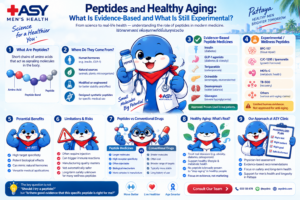
Peptides and Healthy Aging: Evidence vs Experimental | Peptide Pattaya
Peptides are not automatically experimental. Insulin, GLP-1 medicines, teriparatide and many other peptide drugs are established medical therapies. But many peptides promoted for longevity or anti-aging still lack robust human evidence.
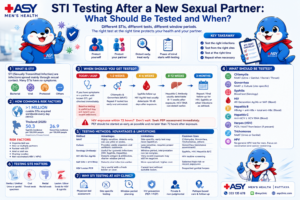
STI Testing After a New Sexual Partner: What to Test & When | Pattaya
STI testing after a new sexual partner is not simply one “full panel” done on one day. Different infections require different samples and have different window periods. Learn what to test, when to test, and when repeat testing may be needed.